
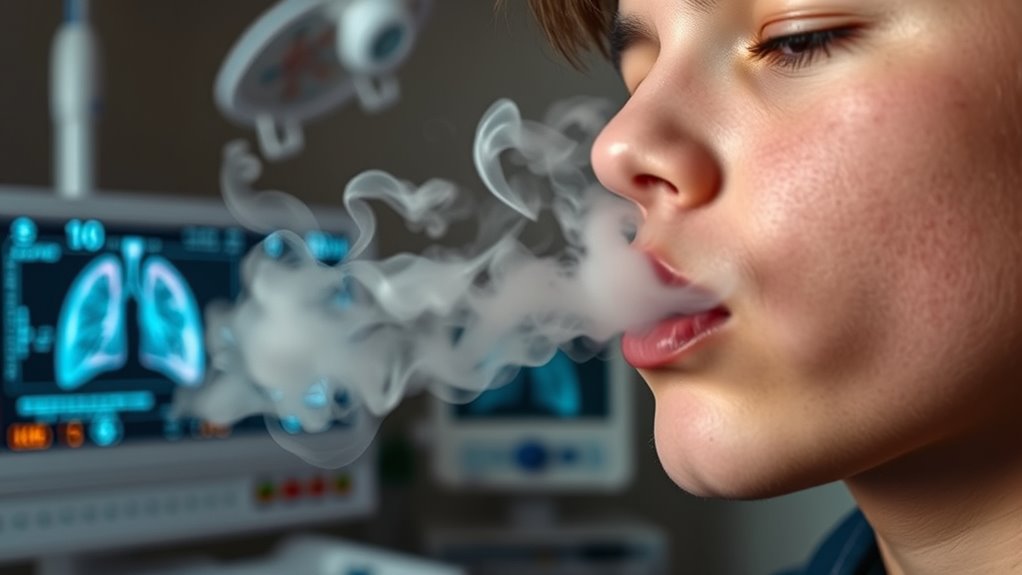

Vaping can substantially increase your risk of developing respiratory diseases like COPD and asthma. The chemicals in vape products irritate your airways, leading to inflammation and worsening symptoms. If you have asthma, vaping can make you more reactive to triggers and lead to more frequent attacks. Chronic exposure could result in irreversible lung damage over time. Understanding these risks is essential for your lung health, and there’s so much more to uncover about the long-term effects.
Key Takeaways
- Vaping contributes to the development and exacerbation of Chronic Obstructive Pulmonary Disease (COPD) due to airway inflammation and lung tissue damage.
- Chemicals in vaping products heighten airway hyperresponsiveness, worsening asthma symptoms and increasing the frequency of asthma attacks.
- Vaping chemicals act as irritants, leading to increased shortness of breath and chest tightness in individuals with asthma.
- Chronic exposure to vaping can result in irreversible lung damage, impairing lung function and architecture over time.
- Understanding the respiratory risks associated with vaping is crucial for preventing long-term health issues related to COPD and asthma.
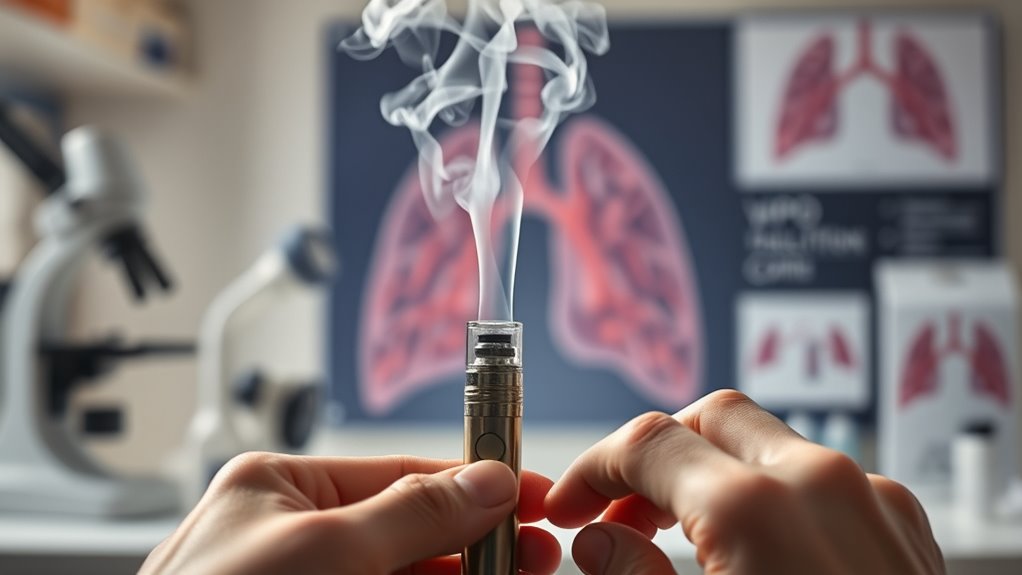
As you explore the world of vaping, it’s essential to understand its potential impact on your respiratory health. Many people think vaping is a safer alternative to smoking, but recent studies have shown that it can still pose significant risks, particularly regarding chronic respiratory diseases like COPD and asthma. The E cigarette chemicals found in vaping liquids can lead to serious health issues, affecting your lungs and overall respiratory function.
When you inhale vapor, you’re not just breathing in flavored water. Those E cigarette chemicals include nicotine, propylene glycol, and various flavoring agents. Each of these components can trigger lung inflammation mechanisms that may contribute to respiratory diseases. For instance, nicotine can impair the normal functioning of your lungs by causing oxidative stress, which damages lung tissue and may lead to chronic obstructive pulmonary disease (COPD). You might not feel the immediate effects, but over time, this damage can accumulate, leading to significant health problems.
Research has shown that vaping can exacerbate asthma symptoms. If you have asthma, you know how important it is to avoid triggers that can worsen your condition. The chemicals in vape products can act as irritants, increasing airway inflammation and making it harder for you to breathe. Some studies indicate that even occasional use can lead to heightened airway hyperresponsiveness, meaning your lungs react more strongly to allergens or pollutants. This can leave you feeling tight-chested and short of breath.
Moreover, the long-term consequences of vaping are still largely unknown. Many people assume that because vaping is relatively new, it can’t be as harmful as traditional smoking. However, emerging evidence suggests that the chronic exposure to E cigarette chemicals can lead to irreversible damage to lung function. You may find it surprising, but the inhalation of vapor may lead to changes in lung architecture, making it harder for your lungs to expand and function properly over time. Additionally, the best shampoos for highlighted hair can help maintain vibrancy in your hair, similar to how one should maintain their lung health when considering the impacts of vaping.
If you’re currently vaping or considering it, it’s essential to weigh the risks carefully. Understanding how E cigarette chemicals affect your lungs and exacerbate inflammation can help you make informed choices about your health. Ultimately, prioritizing your respiratory well-being is fundamental, and recognizing the potential dangers of vaping is the first step in safeguarding your lungs for the future.
Frequently Asked Questions
How Does Vaping Compare to Traditional Smoking for Respiratory Health?
Vaping’s impact on respiratory health is generally considered less harmful than traditional smoking, but it’s not without risks. You’re still exposed to secondhand vapor, which contains various chemicals that can irritate your lungs. The chemical composition of e-liquids varies widely, and some may contain harmful substances. While vaping might reduce certain risks compared to smoking, it’s important to stay informed about its potential long-term effects on your respiratory health.
Are There Specific Vaping Products Linked to Asthma Exacerbations?
Yes, certain vaping products are linked to asthma exacerbations. Flavorings and additives can trigger respiratory issues, especially in individuals with asthma. For example, sweet or fruity flavors might increase inflammation in your airways. Additionally, the type of device you use matters; high-powered devices can produce more harmful chemicals. If you’re experiencing asthma symptoms, it’s essential to evaluate both the flavors and the device types you choose for vaping.
What Age Group Is Most Affected by Vaping-Related Respiratory Diseases?
Adolescents are most affected by vaping-related respiratory diseases due to their vulnerability; their lungs are still developing, making them more susceptible to harm. However, the elderly also face significant risks, as age can weaken respiratory systems, amplifying the effects of vaping. You should be aware that both age groups experience heightened risks, emphasizing the need for awareness and prevention strategies to protect their respiratory health from vaping-related issues.
Can Vaping Cause Respiratory Issues in Non-Smokers?
Absolutely, vaping can cause respiratory issues in non-smokers. Imagine a teenager at a party, inhaling secondhand vapor from friends’ e-cigarettes. Even though they don’t vape, they might start experiencing coughing or shortness of breath. Youth susceptibility makes non-smokers, especially young people, vulnerable to the harmful effects of vapor. The chemicals in e-cigarettes can irritate lungs, leading to respiratory problems, even in those who only breathe in the vapor without directly using the device.
What Long-Term Studies Exist Regarding Vaping and COPD Risk?
Long-term studies on vaping and COPD risk have begun to emerge, focusing on long-term lung health. Some research examines vaping biomarkers in users, revealing potential links to respiratory issues over time. While specific studies are still in their infancy, early findings suggest that prolonged exposure to vaping could contribute to lung damage and COPD risk. It is crucial to stay updated on ongoing research to understand vaping’s long-term effects fully.
Conclusion
In summary, vaping can seriously impact your respiratory health, increasing the risk of conditions like COPD and asthma. Did you know that a study found 34% of young adults who vape reported respiratory issues compared to just 19% of non-vapers? That’s a significant difference! It’s essential to be aware of these risks and make informed choices about your health. Remember, your lungs deserve the best care, so think twice before reaching for that vape pen!