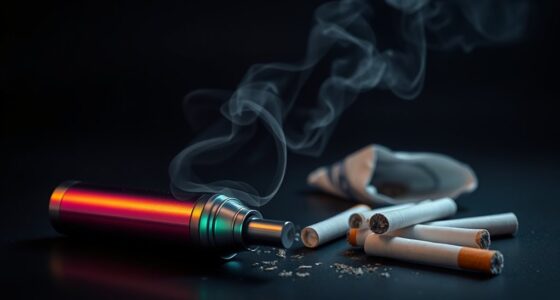


Secondhand and thirdhand vapor from vaping devices can be harmful to those around you. The aerosol contains dangerous chemicals like nicotine, formaldehyde, and heavy metals that increase the risk of respiratory and cardiovascular issues for bystanders. Even after the vapor disperses, toxic residues can linger on surfaces, posing health threats, especially to children and pets. Being aware of these risks is essential for protecting those you care about. There’s more to contemplate regarding safety and well-being.
Key Takeaways
- Secondhand vapor contains harmful chemicals like nicotine and formaldehyde, posing health risks to bystanders, including respiratory and cardiovascular issues.
- Long-term exposure to secondhand vapor can lead to serious health complications for family, friends, and pets nearby.
- Thirdhand vapor consists of toxic residue that settles on surfaces, remaining harmful even after the vapor dissipates.
- Children and pets are particularly vulnerable to the health risks associated with both secondhand vapor and thirdhand residue.
- Increased awareness of the risks from vaping can promote safer habits and informed decision-making to protect others’ health.

Although many people believe vaping is a safer alternative to smoking, it carries its own set of health risks that you should be aware of. One significant concern is the impact of secondhand and thirdhand vapor on those around you. It’s easy to underestimate how your vaping can affect family, friends, and even pets. While you may think you’re enjoying a harmless habit, the reality is that the vapor released into the air can pose serious health risks.
Secondhand vapor consists of the aerosol that comes from your device when you exhale. This aerosol isn’t just water vapor; it contains a mix of chemicals, including nicotine, flavorings, and other harmful substances. Long-term exposure to these chemicals can have detrimental effects on those inhaling them. Studies suggest that people who are regularly exposed to secondhand vapor may face respiratory issues, cardiovascular problems, and other health complications. Even if you’re not smoking traditional cigarettes, your vaping can still harm those around you.
Secondhand vapor contains harmful chemicals that can lead to serious health issues for those nearby.
Then there’s thirdhand vapor, which refers to the residue that settles on surfaces after you’ve vaped. This residue can linger in the environment, even after the vapor dissipates. Children and pets are especially vulnerable to the impacts of thirdhand vapor, as they often interact with surfaces that have absorbed these toxic chemicals. It’s alarming to consider that long-term exposure to these residues can lead to health issues over time, even if they’re not directly inhaling the vapor.
Chemical toxicity is a central concern with both secondhand and thirdhand vapor. The chemicals found in e-liquids can include harmful substances like formaldehyde, acrolein, and various heavy metals. When these chemicals settle onto surfaces or linger in the air, they can pose a risk to anyone who comes into contact with them. The potential for chemical toxicity extends beyond just immediate effects; long-term exposure could lead to more severe health problems down the line. Additionally, understanding the nuances of vapor health risks can help individuals make informed decisions about their habits.
If you vape, being mindful of your surroundings is essential. Think about the impact your habit may have on those you care about. Awareness is the first step in mitigating the risks associated with secondhand and thirdhand vapor. By understanding these potential hazards, you can make more informed choices about your vaping and its effects on others.

Craving Relief Inhaler (2-Pack) - Natural Quit Smoking Substitute, Nicotine & Tobacco-Free, Cigtrus' Non-Electric Solution (Citrus Grapefruit & Lemon Lime)
Helps You Quit Smoking: Designed to provide a satisfying way to curb cravings with a nicotine-free alternative to...
As an affiliate, we earn on qualifying purchases.
Frequently Asked Questions
What Is the Difference Between Secondhand and Thirdhand Vapor?
Secondhand vapor refers to the aerosol you inhale when someone nearby uses a vaping device. It contains a mix of chemicals that disperse into the air. On the other hand, thirdhand vapor refers to the residues left on surfaces after vapor has settled. This includes the chemical composition that lingers on furniture and fabrics, potentially affecting those who come into contact with it later. Understanding both helps you recognize the risks associated with vaping.
How Long Do Vapor Residues Last on Surfaces?
You might think vapor residues disappear quickly, but they can linger on surfaces for days or even weeks. Surface contamination from these residues depends on various factors like the type of material and environmental conditions. Even after the vapor’s gone, the residue’s longevity can pose risks, as it can be inhaled or come into contact with skin. Regular cleaning can help reduce any potential exposure you might encounter in your environment.
Can Pets Be Affected by Secondhand Vapor?
Yes, pets can be affected by secondhand vapor. When you expose your furry friends to vapor, they might inhale harmful substances, which could lead to respiratory issues or other health problems. Animal exposure to these chemicals can be particularly concerning for small pets, as their bodies are more sensitive. To protect your pet’s health, consider creating a smoke-free environment and keeping them away from areas where vaping occurs. Their well-being should always come first!
Are There Specific Vulnerable Groups at Higher Risk?
Yes, certain vulnerable populations face higher risks from exposure to vapor. Children, the elderly, and individuals with pre-existing health conditions are particularly susceptible. Their bodies may struggle to cope with harmful substances, making exposure mitigation vital. It’s imperative to create safer environments for these groups by limiting their exposure to vapor. You’ll find that taking proactive steps can greatly reduce health risks and protect those who need it most.
How Can I Minimize Exposure to Secondhand Vapor?
To minimize exposure to secondhand vapor, start by ensuring good indoor air quality. Open windows and use air purifiers to keep the air clean. Regularly clean surfaces to remove vapor residue; this includes wiping down furniture and vacuuming carpets. Encourage a smoke-free environment, and if someone’s vaping indoors, ask them to step outside. By taking these steps, you can considerably reduce your exposure and create a healthier space for yourself and others.

Cigtrus Smokeless Inhaler, Quit Smoking Aid - Variety Pack - 4 Flavors, Set of 4
Quit Smoking Support – Designed to replace the physical habit and oral fixation without nicotine, tobacco, or harmful...
As an affiliate, we earn on qualifying purchases.
Conclusion
In the end, while you might think you’re just enjoying a little cloud of relaxation, it is crucial to remember that the air around you can hold more than just pleasant aromas. Those invisible remnants of vapor can linger, weaving their way into your environment and potentially affecting those around you. So, the next time you indulge, consider the unseen guests sharing your space and the hidden consequences of your choice. Your health—and theirs—might thank you for it.

Quit Smoking Inhaler Stick 6 Pack, Diffuser Pen Lung Detox for Smokers, Quit Smoking Inhaler, Vaporless Inhaler Quit Vaping Tools, No Nicotine Vapor Pen Quit Vaping, Variety Pack
Natural Smoking Alternative
As an affiliate, we earn on qualifying purchases.

3 Pack Assorted Flavors, 9 Cores, Flavored Air Device Refills
Assorted flavors included are Sparkling Grapefruit, Crisp Mint, and White Cranberry. These desirable blends are a completely safe...
As an affiliate, we earn on qualifying purchases.