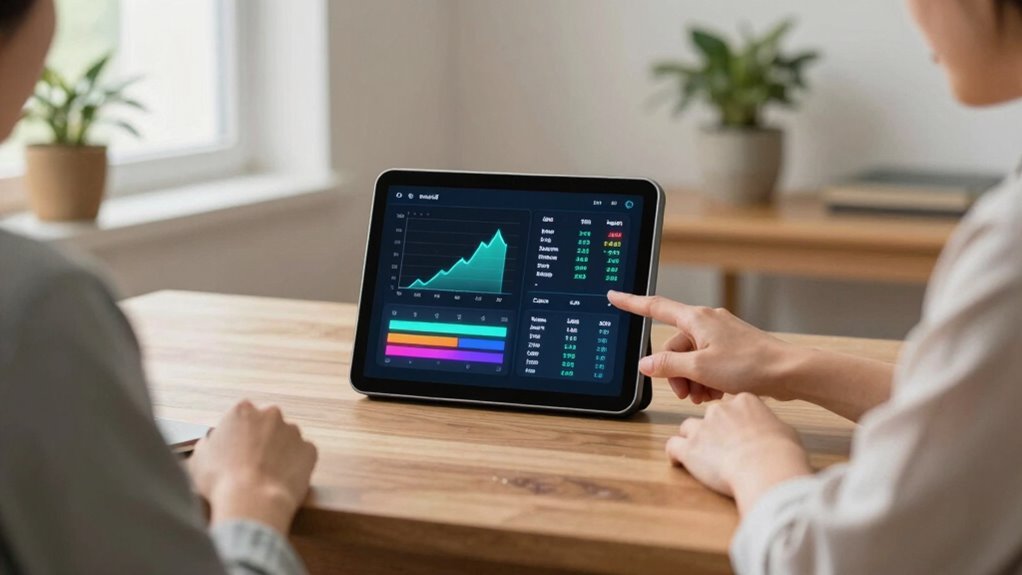
To use air monitor data without obsessing over every number, focus on overall trends rather than daily fluctuations. Set realistic thresholds based on health guidelines and respond only when levels consistently exceed them. Keep a log of your readings alongside daily activities to recognize patterns and make mindful adjustments. Remember, steady improvement matters more than perfection, so view your monitor as a guide, not a source of stress. Continuing will show you how to develop effective, balanced habits for healthier indoor air.
Key Takeaways
- Focus on overall trends and patterns rather than reacting to every small fluctuation.
- Set realistic thresholds based on health guidelines to guide actions without anxiety.
- Log data alongside daily activities to identify meaningful sources of air quality changes.
- Prioritize long-term improvements over immediate reactions to monitor readings.
- Maintain a balanced mindset, using data as a helpful guide rather than a source of stress.

Monitoring your air quality can feel overwhelming, especially when you’re bombarded with a constant stream of numbers. It’s easy to get caught up in trying to interpret every reading, but the key is to focus on understanding the bigger picture rather than obsessing over individual data points. Indoor air quality is a crucial aspect of your health, and air monitors provide valuable information, but they’re just tools to guide your actions—not sources of constant anxiety. When you approach the data with a clear strategy, you can make meaningful improvements without feeling overwhelmed.
Start by familiarizing yourself with what the monitor’s readings mean. Most devices track common pollutants like particulate matter (PM), volatile organic compounds (VOCs), humidity, and carbon dioxide levels. Instead of trying to analyze every fluctuation, look at the overall trends. For example, if your PM levels spike after cooking or cleaning, it’s a sign you can improve ventilation during those activities. Understanding how indoor air quality changes based on daily habits helps you interpret the data more intuitively, turning numbers into actionable insights.
Familiarize yourself with what your monitor tracks, and focus on overall trends to turn data into helpful insights.
Remember, data interpretation doesn’t mean obsessing over every minute change. Instead, set simple thresholds based on health guidelines or your comfort zone. If your monitor shows levels consistently above these thresholds, then it’s time to take action—like increasing ventilation, using air purifiers, or reducing sources of pollution. But if the readings fluctuate within acceptable ranges, don’t fixate on every small variation. Instead, focus on long-term improvements and consistent habits that promote healthier indoor air.
It’s also helpful to keep a log of your air quality readings alongside your activities. Noticing patterns over days or weeks can reveal what’s truly affecting your indoor air quality—whether it’s weather changes, cleaning routines, or outdoor pollution. Recognizing indoor air quality factors can help you prioritize which changes will have the most meaningful impact. Additionally, understanding the effects of pollutants can guide you in making more targeted adjustments. Developing a balanced perspective involves considering both short-term variations and long-term trends, which can be supported by understanding indoor air quality guidelines.
Finally, remember that your goal isn’t perfection but steady improvement. Use your air monitor as a guide, not a source of stress. Focus on making small, consistent changes that enhance your indoor air quality, and trust that the data will reflect those efforts over time. By shifting your mindset from constant scrutiny to mindful interpretation, you’ll be able to use your air monitor effectively without letting the numbers dominate your peace of mind. For example, understanding the importance of biodiversity in indoor environments can also help in creating healthier living spaces. Recognizing the sources of indoor pollution can further help you develop targeted strategies for cleaner air.
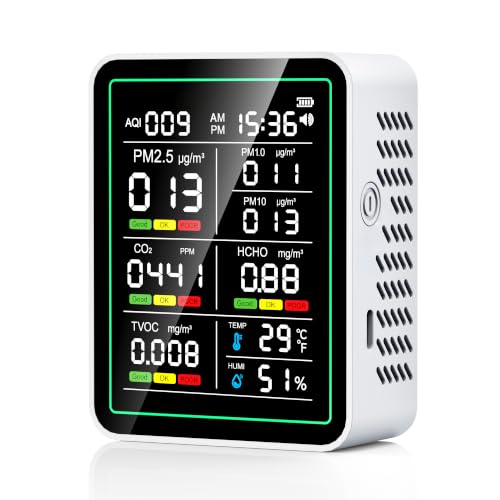
ZEMEOLLO Air Quality Monitor Indoor, 10-in 1 Smart Air Quality Tester
- 10-in-1 Multi-Gas Detection: Monitors CO₂, HCHO, TVOC, benzene, PM2.5, PM10
- HD Color Display with Visual Data: Real-time data with color-coded alerts
- Automatic Environmental Reports: Generates comprehensive air quality assessments
As an affiliate, we earn on qualifying purchases.
As an affiliate, we earn on qualifying purchases.
Frequently Asked Questions
How Often Should I Check My Air Quality Monitor?
You should check your air quality monitor daily, especially if you notice changes in your environment. To guarantee accurate readings, follow calibration tips regularly and place your device in a central, stable location away from drafts or direct sunlight. This way, you’ll get reliable data without obsessing over every number. Consistent monitoring and proper placement help you make informed decisions about your indoor air quality.
Can Air Monitor Data Predict Health Issues?
Air monitor data can’t predict health issues directly, but it can reveal air quality trends that heighten your health risk awareness. Beware of air quality myths that suggest exact predictions—monitor data signals potential problems, prompting you to act. By staying vigilant, you catch early warning signs, reducing risks. So, while it doesn’t foretell illnesses, it empowers you to make informed decisions for healthier living.
What Should I Do if Air Quality Drops Suddenly?
If air quality drops suddenly, act quickly by checking your air monitor against established air quality thresholds. Move indoors, close windows, and turn on air purifiers if available. Keep emergency preparedness supplies nearby, like masks and ventilation options. Stay informed through local alerts and advisories. Taking swift, informed steps helps protect your health and guarantees you’re prepared for sudden air quality changes.
Are There Specific Times to Monitor Indoor Air?
Ever wondered when the best times to check your indoor air quality are? You should monitor during seasonal variations, like winter or summer, when air quality might fluctuate more due to heating or cooling. Also, keep an eye on air quality trends throughout the day—morning, midday, and evening—to catch any sudden changes. Regular checks help you stay aware without obsessing over every number, ensuring a healthier indoor environment.
How Accurate Are Different Types of Air Monitors?
Different air monitors vary in calibration accuracy and device reliability. High-quality monitors, often professionally calibrated, provide more precise and consistent readings, making them more dependable for tracking air quality. Cheaper devices might have less calibration accuracy, leading to occasional inaccuracies. To guarantee dependable data, choose monitors with good reviews, regular calibration options, and trustworthy brands. This way, you can confidently monitor your indoor air without obsessing over every number.

16 in 1 Air Quality Monitor Indoor 7" Wildfire CO2 Monitor, 9 AQI+7 Alerts
- 16-in-1 Air Quality Monitoring: Detects 9 key air parameters and 7 AQI alerts
- Large 7-inch LED Display: Clear, instant air quality readings with adjustable brightness
- High-Precision External Sensors: Provides accurate measurements with 0.001 accuracy
As an affiliate, we earn on qualifying purchases.
As an affiliate, we earn on qualifying purchases.
Conclusion
Remember, while air monitor data can feel like a modern-day oracle, don’t let it turn you into a frantic alchemist chasing perfect air. Focus on trends, not obsess over every digit—think of it as tuning a vintage radio, not deciphering the Rosetta Stone. By balancing awareness with calm, you’ll breathe easier, knowing you’re taking thoughtful steps without turning your home into a 19th-century laboratory. Keep it simple, and let the data guide you, not rule you.
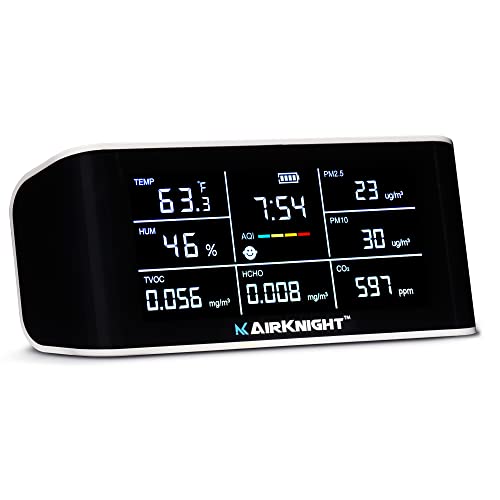
AirKnight Premium Indoor Air Quality Monitor Indoor & Air Quality Sensor. VOC Detector, CO2 Monitor, Formaldehyde Detector HCHO, AQI, PM2.5, PM10 Temperature Humidity Air AQI CO2 Meter
- Detects Multiple Air Pollutants: CO2, PM2.5, TVOC, Formaldehyde, more
- Real-Time Air Quality Display: Large LCD screen for easy reading
- User-Friendly Plug and Play: Includes instructional video and manual
As an affiliate, we earn on qualifying purchases.
As an affiliate, we earn on qualifying purchases.

MOOKA Air Purifier for Home Bedroom Large Room 2200 Ft², True HEPA Filter
- Enhanced Air Intake for Pet Lovers: Larger front and side air inlets
- Covers Large Areas Efficiently: Cleans up to 2200 ft² per hour
- Smart PM2.5 Air Quality Display: Real-time monitoring with digital display
As an affiliate, we earn on qualifying purchases.
As an affiliate, we earn on qualifying purchases.