
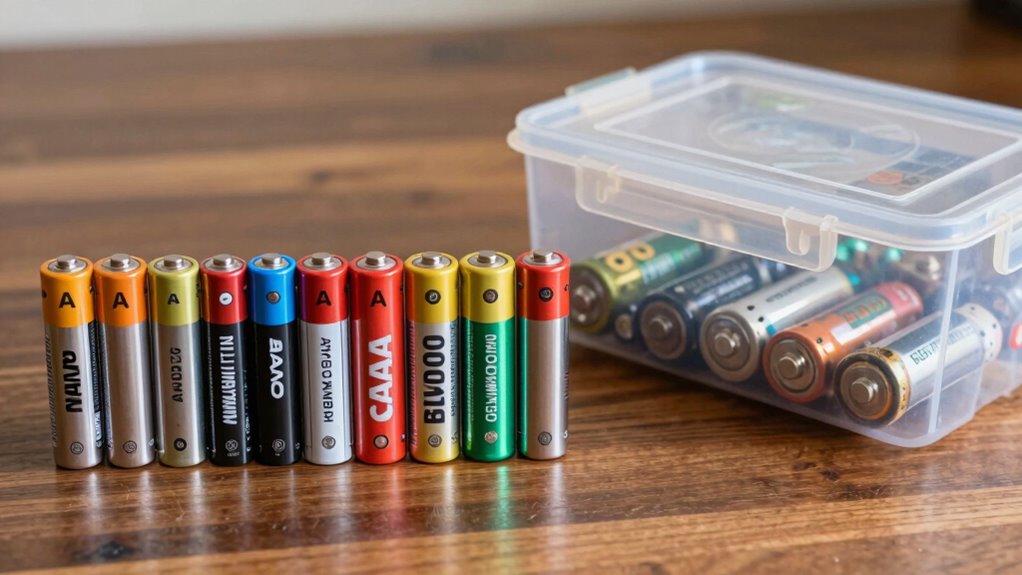

Organizing batteries means arranging and labeling them to make access easy and avoid confusion, like grouping similar types together. Storing them safely, on the other hand, focuses on securing them in a way that prevents hazards such as leaks, fires, or damage, like keeping them in a cool, dry place away from flammable materials. Understanding this difference can help you both find batteries quickly and keep your space safe—stick around to learn more about effective battery management.
Key Takeaways
- Organizing batteries involves categorizing and labeling them for easy access, while storing them safely focuses on protecting from hazards and damage.
- Proper organization keeps batteries orderly and identifiable; safe storage ensures they are kept in conditions that prevent leaks and fires.
- Organizing emphasizes arrangement and management; safe storage emphasizes secure placement away from flammable materials and extreme temperatures.
- Good organization simplifies monitoring battery age and condition; safe storage minimizes environmental and health risks from leaks or ruptures.
- Both practices complement each other to extend battery lifespan and ensure safety during handling, usage, and disposal.
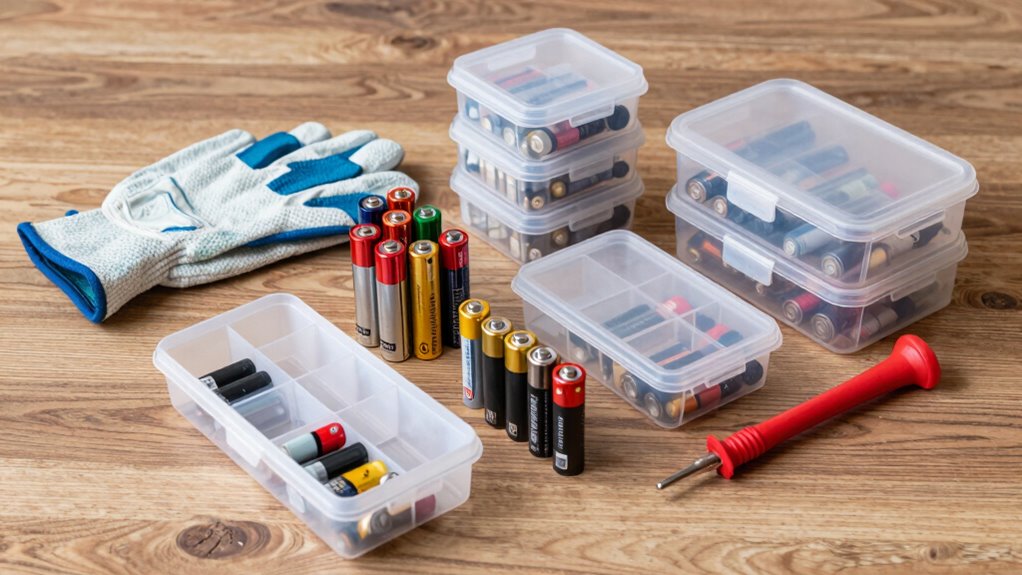
While organizing batteries and storing them safely are closely related tasks, they serve different purposes and require distinct approaches. Organizing batteries focuses on keeping your collection orderly, making it easier to find what you need and preventing accidental damage. Proper organization can extend your batteries’ lifespan because when batteries are stored haphazardly, they’re more likely to get damaged or leak, which shortens their useful life. On the other hand, storing batteries securely emphasizes protecting yourself and your environment from potential hazards, especially chemical safety concerns. Mishandling batteries can lead to leaks, fires, or exposure to harmful substances, so safety measures are essential.
Organizing batteries keeps them accessible and prevents damage; secure storage protects against leaks, fires, and chemical hazards.
When you organize your batteries, you want to keep similar types together—alkaline, lithium-ion, NiMH—and label them if possible. This helps prevent confusion and reduces the chance of using the wrong battery in a device, which can cause damage or reduce battery life. Make sure that batteries are stored in a cool, dry place, away from direct sunlight and extreme temperatures. High heat accelerates chemical reactions inside the battery, decreasing its lifespan and increasing safety risks. Proper organization not only preserves the integrity of each battery but also makes it easier to monitor their age and replace old or degraded units before they leak or fail. Additionally, understanding the importance of chemical safety when handling batteries is crucial to prevent accidents and health hazards. Regularly inspecting your batteries for signs of corrosion or damage can further prevent hazardous situations.
Storing batteries securely involves more than just tidy arrangements. For instance, avoid stacking batteries in a way that could cause them to short circuit. Keep batteries in their original packaging or in a designated container that prevents contact with metal objects like keys or coins. Always store batteries away from flammable materials, and never keep damaged or swollen batteries in your collection. When handling batteries, especially rechargeable or lithium types, you should wear protective gear if there’s a risk of leaks or ruptures. Proper storage reduces the risk of chemical exposure, which is critical for chemical safety, particularly if a battery leaks corrosive substances. Proper storage practices can significantly reduce the risk of chemical leaks and exposure. Incorporating safe handling techniques is essential for minimizing accidents during both storage and use.
In addition, you should regularly check stored batteries for signs of damage or leakage. Implementing a routine inspection process can help catch potential issues early and prevent accidents. Disposing of damaged batteries responsibly prevents chemical contamination and environmental harm. Using proper disposal methods and recycling programs is essential to prevent environmental pollution and health risks. Never throw batteries in household trash. This proactive approach helps safeguard your health and the environment, reinforcing the importance of chemical safety. Ultimately, while organizing helps keep your batteries accessible and in good condition, secure storage protects you and your surroundings from potential hazards. Combining both strategies ensures your batteries last longer and that you handle them responsibly, minimizing risk and promoting a safer space.
As an affiliate, we earn on qualifying purchases.
Frequently Asked Questions
How Often Should I Check My Batteries’ Condition?
You should check your batteries’ condition every 3 to 6 months to guarantee peak battery lifespan and avoid potential issues. Regular inspections help you monitor the charging frequency and identify any signs of deterioration or corrosion early. If you notice decreased performance or leakage, it’s time to recharge or replace them. Maintaining a consistent check schedule keeps your batteries safe and functioning efficiently, prolonging their overall lifespan.
Can I Mix Different Types of Batteries Together?
You shouldn’t mix different types of batteries together because of battery compatibility and storage safety concerns. Mixing alkaline, lithium, or rechargeable batteries can cause leaks, fires, or damage. Always store batteries separately by type, keeping them in their original packaging or in a designated container. This way, you prevent accidental short circuits or leaks, ensuring both your safety and the longevity of your batteries.
What Are the Signs of a Damaged or Leaking Battery?
Have you ever seen a battery with a white, crusty substance or noticed a foul smell? These are clear signs of a damaged or leaking battery. Watch for battery corrosion around the terminals, and if you notice any leaking signs like fluid pooling or discoloration, handle the battery carefully. Leaking batteries can be hazardous—dispose of them properly and avoid contact with skin or eyes. Do you recognize these warning signs?
Are There Specific Storage Conditions for Rechargeable Batteries?
Yes, you should store rechargeable batteries in a cool, dry place with a stable storage temperature, ideally between 50-77°F (10-25°C). Keep them away from direct sunlight and heat sources. Be mindful of the battery chemistry, as lithium-ion, NiMH, and other types may have specific storage requirements. Proper storage prevents capacity loss and safety hazards, ensuring your batteries stay in good condition and last longer.
How Do I Dispose of Old or Damaged Batteries Safely?
When it’s time to part with old or damaged batteries, think of it as giving them a graceful farewell. Safely dispose of them by taking them to a designated battery recycling center—these facilities handle hazardous waste responsibly. Never throw batteries in the trash, as they can leak harmful substances. Proper disposal prevents environmental harm, ensuring that hazardous waste is managed correctly and batteries are recycled to recover valuable materials.
battery safety storage container
As an affiliate, we earn on qualifying purchases.
As an affiliate, we earn on qualifying purchases.
Conclusion
Remember, organizing batteries is like tidying up your old steamer trunk—everything in its place, easy to find. Storing them safely is more like safeguarding a precious artifact, preventing leaks and hazards. By keeping these steps distinct yet connected, you avoid turning your space into a scene from a Mad Max movie. So, treat your batteries with care, and you’ll dodge the chaos of a battery bonfire—because safety and order are the real treasures in your modern-day castle.
As an affiliate, we earn on qualifying purchases.
As an affiliate, we earn on qualifying purchases.
Fall Picks
fall essentials
As an affiliate, we earn on qualifying purchases.