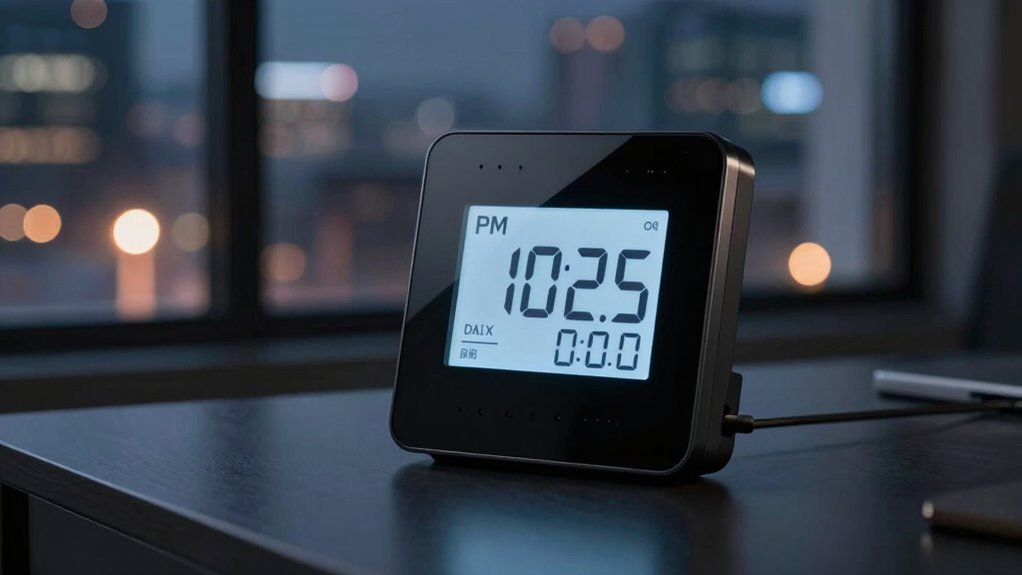
A PM2.5 monitor shows you the level of tiny particles in the air, helping you track current pollution and identify spikes during busy times. It’s useful for evaluating air quality trends and testing ventilation or air purifier effectiveness. However, it can’t tell you what the particles are made of or measure gases like ozone or nitrogen dioxide. To get a full picture of air safety, there’s more to explore beyond what a PM2.5 monitor can reveal.
Key Takeaways
- PM2.5 monitors measure tiny particle concentrations and reveal current air quality levels.
- They cannot identify the specific composition or source of particles like dust or pollen.
- Environmental factors such as humidity and temperature can influence the accuracy of readings.
- They do not measure gaseous pollutants like nitrogen dioxide or ozone.
- Regular calibration is essential for reliable data, but they do not provide a complete picture of overall air quality.
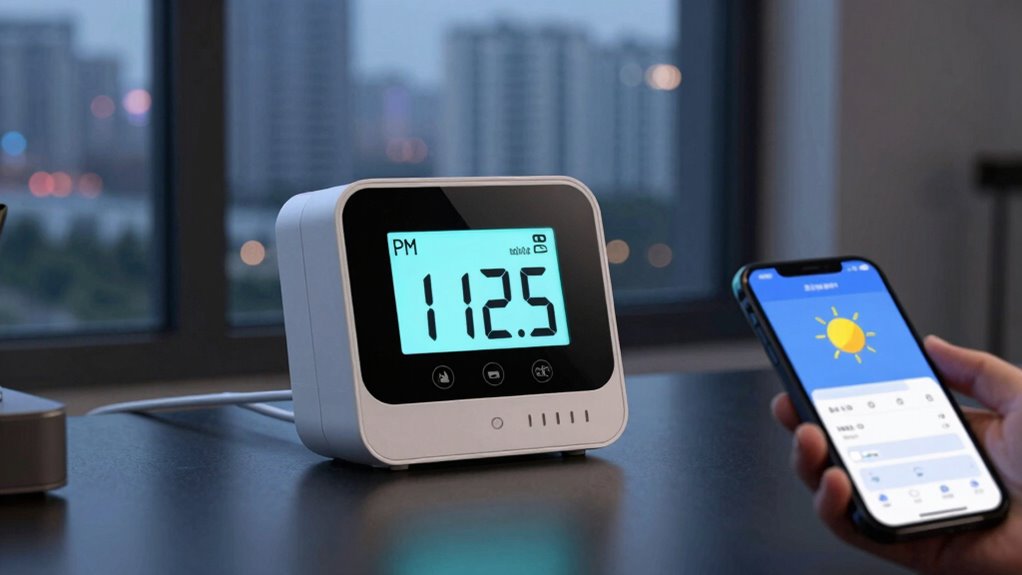
Have you ever wondered what a PM2.5 monitor can really tell you about air quality? These devices are designed to measure tiny particles in the air that are 2.5 micrometers or smaller—small enough to penetrate deep into your lungs. When you look at the readings from your PM2.5 monitor, you get a snapshot of the current particle concentration, but it’s important to understand what that data truly signifies. For example, the monitor can reveal air quality trends over time, helping you see patterns like whether pollution levels spike during rush hours or decrease on weekends. This trend data can be invaluable for making informed decisions about outdoor activities or evaluating the effectiveness of air purifiers and ventilation systems.
However, the accuracy of your PM2.5 monitor hinges on proper sensor calibration. Over time, sensors can drift, leading to inaccurate readings that might either underestimate or overestimate pollutant levels. Regular calibration is crucial to ensure reliable data—some monitors have built-in calibration features, while others require manual adjustments or periodic professional servicing. Without calibration, you could be misled into thinking the air is safer than it actually is or unnecessarily alarmed by false high readings. Calibration also helps your device maintain consistency, which is essential when tracking air quality trends over days, weeks, or months. Additionally, understanding sensor drift and how it affects measurements can help you maintain your device’s reliability.
Despite their usefulness, PM2.5 monitors do have limitations. They primarily measure particle mass concentration but don’t specify what those particles are composed of—whether they’re dust, pollen, smoke, or other pollutants. So, while your monitor can tell you that particulate levels are high, it cannot tell you the specific source or health risks associated with those particles. Moreover, environmental factors like humidity and temperature can influence readings, sometimes making them less accurate if your device isn’t properly maintained or calibrated. Recognizing air quality parameters and their implications can help you better interpret your monitor’s data. Knowing how environmental factors influence readings can also guide you in adjusting your monitoring practices for more accurate results.
Additionally, a PM2.5 monitor alone can’t provide a complete picture of air quality. It doesn’t measure gaseous pollutants like nitrogen dioxide or ozone, which also impact health. To get a thorough understanding, you might need extra sensors or professional air quality assessments. It’s also helpful to understand how air pollution sources contribute to particulate levels, enabling more targeted actions to improve air quality. Regularly reviewing air quality guidelines can help you determine what levels are considered safe for your health. In essence, while your PM2.5 monitor is a powerful tool for detecting and understanding trends in airborne particles, it’s important to recognize its boundaries. Proper sensor calibration, awareness of environmental influences, and supplementing data with other measurements will help you make the most informed decisions about your indoor and outdoor air quality.
As an affiliate, we earn on qualifying purchases.
Frequently Asked Questions
How Often Should I Calibrate My PM2.5 Monitor?
You should calibrate your PM2.5 monitor at least once every six months to guarantee accurate readings. Calibration frequency depends on sensor lifespan and usage; if you use it daily or in harsh environments, consider calibrating more often. Regular calibration helps maintain sensor accuracy, preventing drift over time. Keep track of calibration dates, and follow manufacturer recommendations to ensure your monitor provides reliable data.
Can PM2.5 Monitors Detect Specific Particle Sources?
Imagine a detective peering through a foggy window, trying to spot specific clues. Your PM2.5 monitor can’t directly identify particle sources, but it helps with particle identification by measuring pollution levels. While it can’t differentiate sources precisely, sudden spikes might hint at traffic, cooking, or fires. Use trend patterns and contextual clues to infer source differentiation, but for exact particle sources, specialized equipment is still needed.
Are All PM2.5 Monitors Equally Accurate?
No, not all PM2.5 monitors are equally accurate. You should consider sensor sensitivity, as some devices detect smaller particles more precisely, and data reliability, which varies based on build quality and calibration. Cheaper monitors might give inconsistent readings, while higher-quality ones provide more trustworthy data. Always check reviews and specifications to guarantee you’re choosing a monitor that offers accurate, reliable measurements for your needs.
How Does Weather Affect PM2.5 Readings?
Weather acts like a sweeping broom, dispersing or concentrating PM2.5 particles. Storms and rain clear the air, lowering readings, while calm, stagnant conditions trap pollutants, raising levels. Weather patterns influence pollutant dispersion, so your PM2.5 monitor’s readings can fluctuate with changing skies. Keep in mind, wind speeds and humidity can skew results, making it essential to take weather into account when interpreting air quality data.
Can PM2.5 Monitors Predict Air Quality Trends?
PM2.5 monitors can help identify air quality trends over time, but they don’t predict future conditions. To get accurate insights, you should monitor indoor pollution sources and maintain your device regularly. By tracking patterns, you can anticipate potential air quality issues and take action early. Remember, consistent device maintenance guarantees reliable readings, giving you a clearer picture of ongoing trends and helping you make informed decisions about your indoor environment.
As an affiliate, we earn on qualifying purchases.
Conclusion
A PM2.5 monitor is like a vigilant sentinel, giving you a snapshot of your air’s hidden secrets. It can alert you to lurking dangers and help you breathe a little easier, but it’s not a crystal ball predicting every shift in air quality. Remember, it’s a helpful guide, not a fortune-teller. Use it wisely, and let it be your steady ally in steering through the invisible world of airborne particles.
As an affiliate, we earn on qualifying purchases.
air purifier with air quality monitor
As an affiliate, we earn on qualifying purchases.
As an affiliate, we earn on qualifying purchases.
Halloween Picks
halloween
As an affiliate, we earn on qualifying purchases.