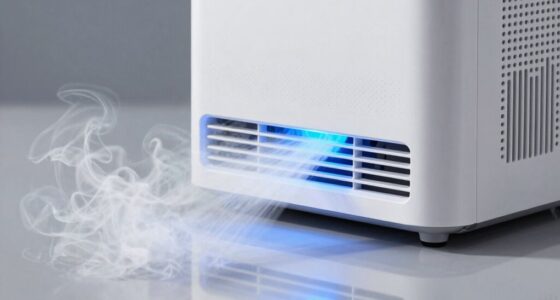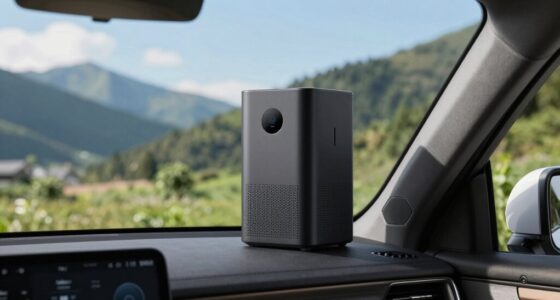
Activated carbon in purifiers is a specially engineered material with a highly porous structure that captures and removes contaminants, odors, and harmful chemicals from your air or water. Its vast surface area and optimized pore size allow it to attract tiny particles and gases effectively, improving overall purification. This active filtration process boosts the purifier’s ability to deliver cleaner, healthier environments. Keep exploring to discover how this powerful material works even better in your purifier.
Key Takeaways
- Activated carbon is a highly porous material designed to trap contaminants through adsorption.
- Its extensive surface area and pore structure enable efficient removal of pollutants and odors.
- Activation process enhances pore size and distribution, optimizing pollutant attraction.
- It captures chemicals, gases, and particles, improving air and water purification effectiveness.
- Material design ensures maximum surface accessibility for targeted contaminant removal.
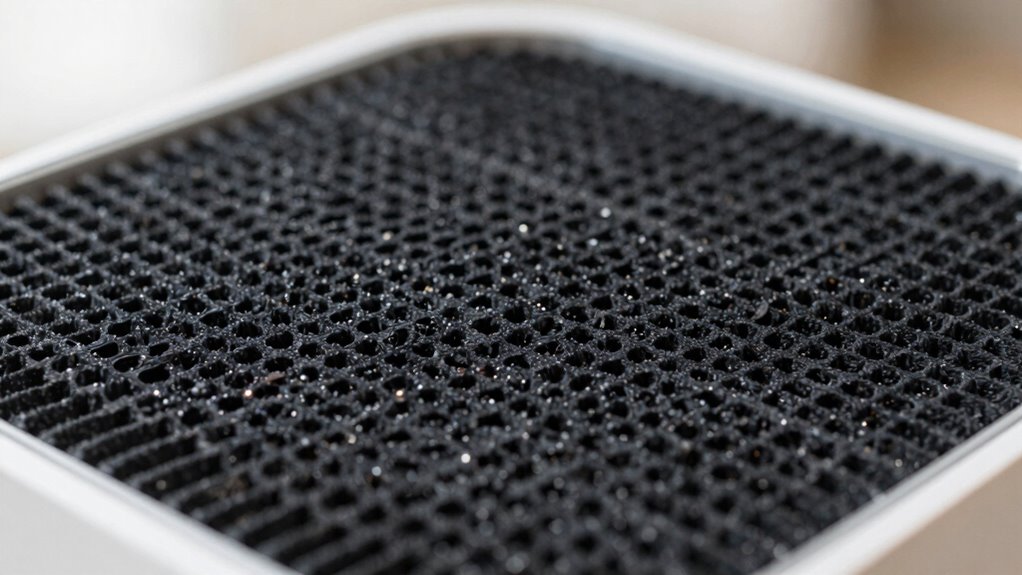
Activated carbon plays a essential role in purifiers by effectively removing contaminants and odors from the air or water. When you look at a purifier, the activated carbon inside is responsible for a big part of its cleaning power. Its ability to trap impurities depends largely on its adsorption efficiency, which measures how well it can attract and hold onto particles, chemicals, and gases. The higher the adsorption efficiency, the better the purifier is at eliminating unwanted substances, giving you cleaner, fresher air or water.
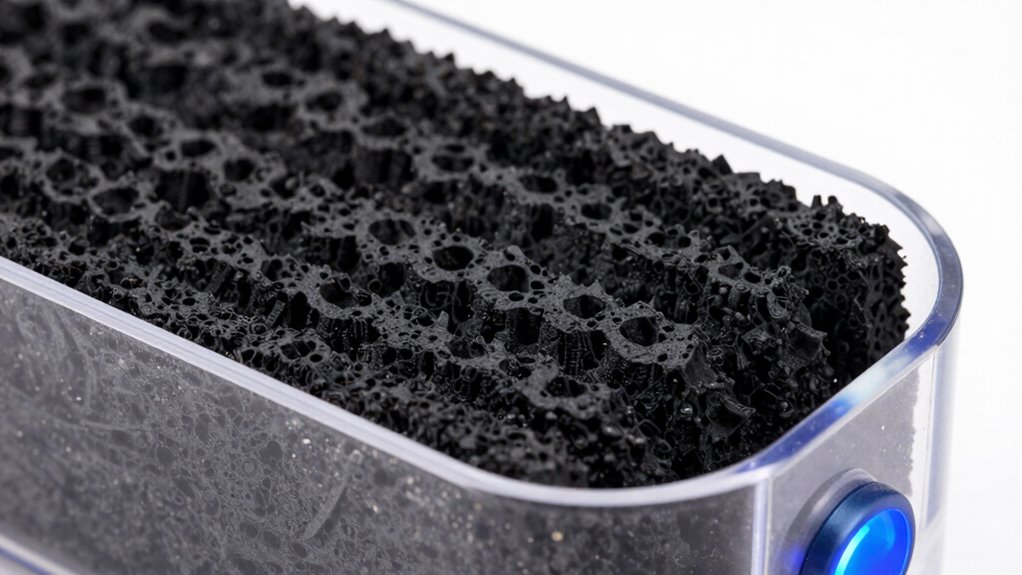
The key to activated carbon’s effectiveness lies in its pore structure. You might think of it as a microscopic sponge, but it’s more like a complex maze of tiny holes and channels. These pores come in various sizes, from small micropores to larger mesopores and macropores. The micropores are especially essential because they provide an immense surface area—often hundreds of times greater than the carbon’s own volume. This extensive surface area allows the activated carbon to adsorb more contaminants at once, boosting its overall efficiency. An important aspect of this structure is its pore size distribution, which directly influences its adsorption capabilities for different types of pollutants.
Your choice of activated carbon depends heavily on its pore structure. If the pores are too big, the adsorption efficiency decreases because larger pores are less effective at trapping small molecules like volatile organic compounds (VOCs) or odors. Conversely, if the pores are appropriately sized and well-developed, the carbon can attract and hold onto tiny particles and gases more effectively. That’s why manufacturers carefully process and activate the carbon to optimize its pore structure for specific uses, whether for air purification or water filtration.
Understanding what “activated carbon” really means helps you appreciate why it’s so effective in purifiers. It’s not just a simple filter; it’s a sophisticated material engineered to maximize surface area and pore accessibility. This design ensures that your purifier can remove a wide spectrum of pollutants efficiently. When you see “activated carbon” in a product description, know that it’s a high-surface-area material with a carefully developed pore structure that’s tailored for maximum adsorption efficiency. This combination is what enables your purifier to deliver cleaner air and water, making your environment healthier and more comfortable.
activated carbon air purifier filter
As an affiliate, we earn on qualifying purchases.
As an affiliate, we earn on qualifying purchases.
Frequently Asked Questions
How Long Does Activated Carbon Typically Last Before Replacement?
Activated carbon typically lasts about 6 to 12 months before you need to replace it. The carbon lifespan depends on factors like usage, air quality, and the purifier’s capacity. To maintain peak performance, check your purifier’s recommended replacement frequency and monitor for signs of saturation, such as reduced odor removal. Regular replacement ensures your purifier continues effectively filtering out pollutants and odors, keeping your indoor air fresh.
Can Activated Carbon Remove Viruses From the Air?
Activated carbon isn’t effective at removing viruses from the air because it mainly focuses on chemical absorption and trapping odors or gases. While it’s great for improving air filtration by capturing certain pollutants, viruses are tiny particles that require HEPA filters for effective removal. Don’t rely solely on activated carbon if you want to reduce airborne viruses; instead, guarantee your purifier combines HEPA and activated carbon for thorough protection.
Is Activated Carbon Safe for Children and Pets?
Activated carbon is generally safe for children and pets when used properly. It’s designed with pediatric safety in mind and doesn’t release harmful chemicals. However, you should prevent pet exposure to loose activated carbon powder to avoid ingestion or inhalation. Make certain the purifier’s filter is correctly installed and maintained. If your child or pet accidentally ingests or inhales some, consult a healthcare professional promptly for guidance.
How Is Activated Carbon Different From Charcoal?
You might think activated carbon and charcoal are the same, but they differ considerably. Activated carbon has unique chemical properties due to its manufacturing process, which involves high heat and activating agents. This process creates a porous structure that increases surface area, enhancing its ability to adsorb impurities. Charcoal, however, is less processed, with fewer pores and lower adsorption capacity, making activated carbon more effective for purification.
Does Activated Carbon Remove All Types of Odors?
Activated carbon effectively removes many odors through chemical absorption and surface adsorption, but it doesn’t eliminate all types. Stronger or chemically complex odors, like certain chemicals or fumes, may require additional filtration methods. You should know that its porous structure traps odor molecules, but some persistent smells might linger. For thorough odor removal, consider using activated carbon alongside other filters to guarantee a cleaner, fresher environment.
water purifier with activated carbon
As an affiliate, we earn on qualifying purchases.
As an affiliate, we earn on qualifying purchases.
Conclusion
Think of activated carbon as a silent sponge, enthusiastically soaking up the impurities in your air like a diligent gardener tending to a garden. It’s your purifier’s hidden hero, trapping odors and chemicals before they can bother you. When you breathe easy, thanks to this porous wonder, it’s like a fresh breeze sweeping through a dense forest. So, trust in activated carbon—your invisible shield guarding your home’s air with quiet, steadfast devotion.
high adsorption activated carbon for purifiers
As an affiliate, we earn on qualifying purchases.
As an affiliate, we earn on qualifying purchases.
As an affiliate, we earn on qualifying purchases.
Halloween Picks
halloween
As an affiliate, we earn on qualifying purchases.