


Vaping during pregnancy can pose significant risks to both you and your baby. Nicotine can cross the placenta, leading to low birth weight and developmental issues. Additionally, e-cigarettes contain harmful chemicals like formaldehyde, which can cause respiratory complications. You might find it tough to quit due to cravings and psychological dependency. Prioritizing your health and exploring safer options can improve pregnancy outcomes. There’s more to learn about the hidden dangers you should be aware of.
Key Takeaways
- Vaping during pregnancy exposes the fetus to nicotine, increasing risks of low birth weight and premature birth.
- E-cigarettes contain harmful chemicals like formaldehyde and acrolein, which can complicate pregnancy and affect fetal health.
- Vapor inhalation poses respiratory health risks due to toxic substances, impacting both the mother and baby.
- Psychological dependency on vaping can make quitting difficult; support from healthcare providers is essential for healthier outcomes.
- The long-term effects of vaping during pregnancy are still uncertain, emphasizing the need for informed choices and safer alternatives.
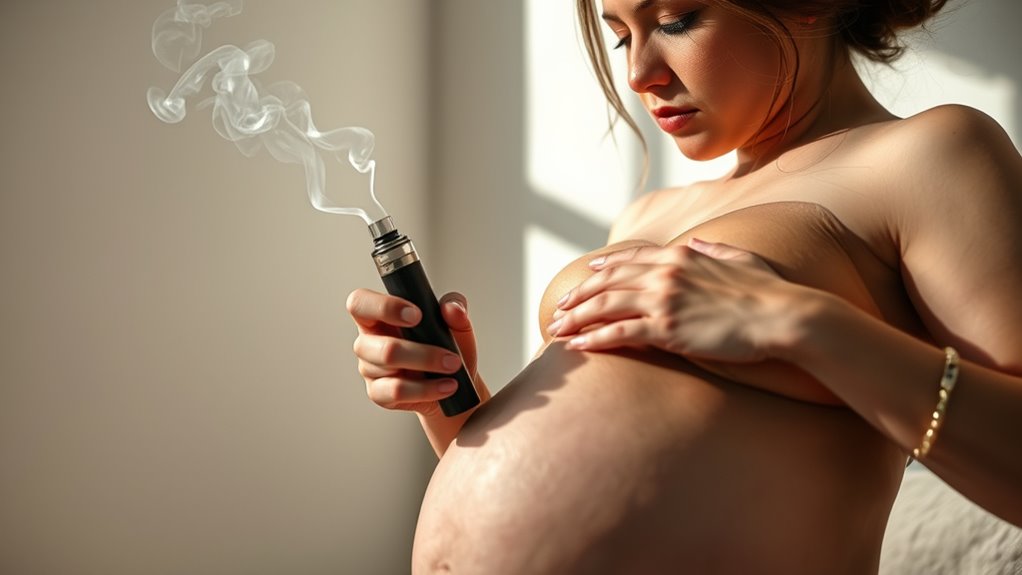
When you’re expecting, every choice you make can impact your baby’s health, and vaping is no exception. If you’re considering using e-cigarettes as a way to cope with cravings or to quit smoking, it’s vital to understand the risks associated with vaping during pregnancy. Many people believe that vaping is a safer alternative to traditional smoking, but it’s important to remember that vapor inhalation effects can still be harmful to both you and your developing baby.
One of the biggest concerns is nicotine addiction. When you vape, you’re often inhaling nicotine, which can cross the placenta and affect your baby’s development. Research shows that nicotine exposure during pregnancy can lead to low birth weight, premature birth, and developmental issues later in life. It’s vital to recognize that while vaping might seem like a less harmful option compared to cigarettes, the risks associated with nicotine are still very real.
Moreover, the vapor inhalation effects go beyond nicotine. E-cigarettes can contain various harmful chemicals, including formaldehyde and acrolein, which can pose serious health risks. These substances can contribute to respiratory issues and may lead to complications during pregnancy. If you’re inhaling these chemicals, you could be exposing your baby to toxins that can harm their growth and overall health.
Even if you don’t consider yourself addicted to nicotine, the act of vaping can create a psychological dependency that makes it difficult to quit. Many pregnant women find themselves in a challenging situation, torn between the desire to stop for their baby’s sake and the cravings that come from nicotine addiction. If you’re struggling with this, it’s vital to seek support. Talking to healthcare providers or joining a support group can help you find healthier coping mechanisms.
It’s also worth noting that the long-term effects of vaping during pregnancy are still not fully understood. As research continues to emerge, the potential risks may become clearer. However, what we do know is that prioritizing your baby’s health means making informed choices. If you’re currently vaping or thinking about starting, consider the implications for both you and your baby. Quitting altogether or seeking safer alternatives can considerably improve your pregnancy experience. Additionally, exploring self-watering feature options for plant care can provide a healthy distraction during this time.
nicotine free pregnancy safe vaporizer
As an affiliate, we earn on qualifying purchases.
As an affiliate, we earn on qualifying purchases.
Frequently Asked Questions
Can Secondhand Vapor Affect My Baby’s Health?
Yes, secondhand vapor can affect your baby’s health. When you’re exposed to secondhand vapor, it increases the risk of fetal exposure to harmful chemicals. This can lead to potential developmental issues and respiratory problems for your baby. It is crucial to minimize this exposure to protect your child’s health. If you’re around others who vape, consider moving away to reduce the risk and create a safer environment for your baby.
What Are Safer Alternatives to Vaping During Pregnancy?
If you’re looking for safer alternatives to vaping during pregnancy, consider nicotine replacement therapies like patches or gum, which can help manage cravings without the risks associated with vapor. Herbal inhalers can also provide a soothing experience without nicotine, offering a way to calm your nerves. Always consult your healthcare provider before trying any alternatives, as they can guide you in making the best choices for you and your baby’s health.
How Does Vaping Compare to Smoking During Pregnancy?
Imagine you’re standing at a crossroads, with one path leading to smoking and the other to vaping. While both can carry risks, smoking’s like a raging storm, bombarding you with tar and toxic chemicals. Vaping, though often seen as lighter, still contains vapor chemicals and nicotine addiction that can harm you and your baby. Ultimately, neither choice is safe, but understanding these differences helps you navigate your journey with care.
Can Vaping Lead to Premature Birth?
Yes, vaping can lead to premature birth. When you vape, the chemicals can negatively impact prenatal health and disrupt fetal development. Studies suggest that exposure to nicotine and other substances in e-cigarettes may increase the risk of early labor. It’s crucial to weigh how your choices affect your baby. Prioritizing a smoke-free environment can help you support a healthier pregnancy and promote ideal fetal growth. Take care of yourself and your little one.
Are There Any Safe Vaping Products for Pregnant Women?
No, there aren’t any truly safe vaping products for pregnant women. While some may offer nicotine alternatives or claim to be free from harmful ingredients, it’s tough to guarantee flavor safety and overall safety during pregnancy. Many vaping products still contain substances that could harm you and your baby. It’s best to avoid vaping altogether and consult your healthcare provider for safer options to manage cravings or stress during pregnancy.
pregnancy safe herbal smoking alternatives
As an affiliate, we earn on qualifying purchases.
As an affiliate, we earn on qualifying purchases.
Conclusion
In summary, if you’re pregnant, it’s essential to think about the risks of vaping. Studies show that pregnant women who vape are 30% more likely to have a baby with low birth weight, which can lead to serious health issues. By choosing to quit vaping, you’re not just protecting your own health but also giving your baby the best start in life. Every small decision you make can have a big impact on your child’s future.
support for quitting vaping during pregnancy
As an affiliate, we earn on qualifying purchases.
As an affiliate, we earn on qualifying purchases.
pregnancy health monitoring devices
As an affiliate, we earn on qualifying purchases.
As an affiliate, we earn on qualifying purchases.
Fall Picks
fall essentials
As an affiliate, we earn on qualifying purchases.