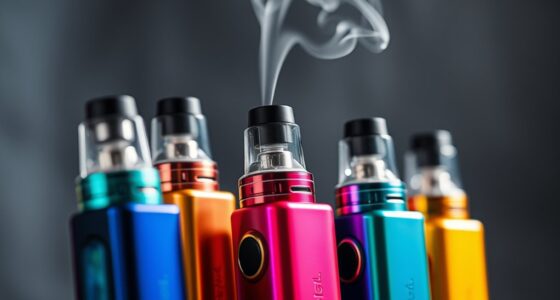

Flavored disposable vapes are popular, especially among youth, largely due to enticing marketing and vibrant flavors. However, governments are responding with stricter regulations to limit access and protect young users from health risks. While these measures aim to reduce vaping rates, they might push the market underground, leading to unregulated products. It’s vital to understand the implications of these challenges and the potential alternatives available. Discover more about the evolving landscape of vaping and its effects.
Key Takeaways
- Governments are enacting stricter regulations and bans on flavored disposable vapes to protect youth from addiction and associated health risks.
- These regulations may inadvertently drive the flavored vape market underground, leading to the emergence of unregulated products.
- The effectiveness of current regulations in reducing flavored vape popularity remains uncertain and is a topic of ongoing research.
- Alternatives to flavored vapes include nicotine patches, gum, and other smoking cessation aids that do not carry the same health risks.
- Increased consumer awareness about marketing tactics and health implications can lead to more informed choices regarding vaping products.

Have you ever wondered why flavored disposable vapes have surged in popularity? It’s a question many people ask, especially with the increasing visibility of these products in shops and online. The rise can be attributed to clever marketing strategies that target specific demographics, particularly younger adults and teens. These strategies often highlight the appealing flavors and perceived convenience, drawing in new users who might be curious about vaping without considering the potential health impact.
The surge in popularity of flavored disposable vapes is driven by targeted marketing strategies appealing to youth and convenience.
When you think about it, the allure of flavors like strawberry, watermelon, or mint can make vaping seem harmless or even fun. This marketing approach capitalizes on the sensory experience, making it more enticing than traditional cigarettes. You might find yourself lured in by the vibrant packaging and catchy advertisements that promise a satisfying puff without the harshness of tobacco. However, the reality is more complex.
While these flavors may mask the harshness of nicotine, they can also lead to increased consumption and dependency. The health impact of vaping, especially flavored varieties, is still being studied, but preliminary findings suggest that these products can contribute to respiratory issues and other long-term health problems. You might think that because they’re marketed as a safer alternative to smoking, they’re risk-free—unfortunately, that’s not the case.
Regulatory challenges have emerged as governments grapple with how to manage the sale and distribution of flavored disposable vapes. Some jurisdictions have started to impose stricter regulations or even bans on flavored products, aiming to protect young people from potential addiction and health risks. You might wonder how effective these measures will be in curbing the popularity of flavored vapes. The reality is that while regulations can help reduce access, they often push the market underground or lead to the emergence of new, unregulated products.
As a consumer, you have the power to make informed choices. Understanding the marketing tactics behind flavored disposable vapes can help you navigate the vast array of products available. Consider the health implications seriously before trying them out. Engaging in discussions about vaping and sharing knowledge with peers can also create a more informed community. Whether you’re a newcomer or someone who’s been curious for a while, it’s essential to weigh the fun of flavors against the potential risks they carry. Your health should always come first. Additionally, utilizing AI-driven analysis in your decision-making process can help you better understand the potential risks and benefits associated with these products.

60 Count – Nicotine Patches 3mg (Applicable to Step 1/Step 2/Step 3), Transdermal Stop Smoking Aid for Craving Relief, Flexible Dosing with Fast-Acting Nicotine Replacement Therapy
- Nicotine Content: Contains 3mg nicotine per patch
- Gradual Reduction: Designed for step-by-step tapering
- Relieves Withdrawal: Eases cravings and withdrawal symptoms
As an affiliate, we earn on qualifying purchases.
As an affiliate, we earn on qualifying purchases.
Frequently Asked Questions
Are Flavored Disposable Vapes Safe for Young Adults?
Flavored disposable vapes aren’t considered safe for young adults. The youth appeal of these products often masks the potential risks of nicotine addiction and other health issues. When you inhale these flavored vapes, the enticing taste can make you underestimate the harmful effects. Research shows that flavor masking can lead to increased usage among young adults, heightening the risk of developing long-term dependence and health problems. It’s essential to stay informed and cautious.
How Do Flavored Disposable Vapes Compare to Traditional Cigarettes?
Flavored disposable vapes often appeal more to young adults than traditional cigarettes due to flavor marketing and their less harsh taste. While both deliver nicotine and can lead to addiction, vapes generally contain fewer harmful chemicals than cigarettes. However, the enticing flavors can mask the risks, making it easier for you to underestimate nicotine’s addictive nature. Ultimately, both can be harmful, but vapes might seem less intimidating at first glance.
What Are the Environmental Impacts of Disposable Vapes?
Disposable vapes contribute markedly to environmental pollution due to their plastic components and electronic waste. When you discard them, they often end up in landfills, where they take years to decompose. Poor waste management practices can exacerbate this issue, leading to harmful chemicals leaching into the soil and water. By choosing to recycle or properly dispose of vapes, you can help mitigate their negative impact on the environment and promote sustainability.
Can Flavored Disposable Vapes Help With Smoking Cessation?
Can flavored disposable vapes really help you quit smoking? Yes, they might! The appealing flavors can make shifting from traditional cigarettes easier, providing a satisfying experience without the harmful smoke. For many, the flavor appeal distracts from the harshness of nicotine addiction, making it a more enjoyable alternative. While not a guaranteed solution, these vapes can serve as a useful tool in your journey toward cessation, helping you gradually reduce your dependence on nicotine.
What Ingredients Are Commonly Found in Flavored Disposable Vapes?
Flavored disposable vapes commonly contain flavor additives, which give them their appealing taste. You’ll often find propylene glycol, a common base ingredient that helps produce vapor. Nicotine is frequently included for those seeking a similar experience to smoking. Additionally, vegetable glycerin may be present, enhancing the vapor production. Always check the label to understand what you’re inhaling, as formulations can vary markedly between brands and flavors.

Amazon Basic Care Coated Nicotine Polacrilex Gum 4 mg, Mint Freeze Flavor, Stop Smoking Aid, Nicotine Replacement Therapy, Reduces Withdrawal Symptoms, 160 Count
- Active Ingredient: Nicotine Polacrilex in Gum
- Purpose: Stop Smoking Aid and NRT
- Benefit: Reduces Withdrawal Symptoms and Cravings
As an affiliate, we earn on qualifying purchases.
As an affiliate, we earn on qualifying purchases.
Conclusion
In the ever-shifting landscape of flavored disposable vapes, steering regulatory challenges feels like walking a tightrope. As authorities tighten restrictions, it’s essential to explore alternatives that satisfy cravings without compromising health. Embracing innovation in this sector could lead to safer options that appeal to consumers. By staying informed and adaptable, you can find a balance that works for you. Remember, the goal is to enjoy flavors without risking wellbeing—after all, your health is the most important flavor of all.

Smokeless Inhaler | Flavored Air Device with 18 Plant-Based Cores Simple | Fresh Air Stop Smoking Aid | 36 Days of Scent | Portable, Reusable & Non-Electric
- Simple Daily Sensory Accessory: Light, refreshing flavored air stick
- Six Flavor Options: Banana, Icy Mint, Grapefruit, Apple, Orange Vanilla, Lemon
- Portable & Easy to Carry: Slim, lightweight design for on-the-go use
As an affiliate, we earn on qualifying purchases.
As an affiliate, we earn on qualifying purchases.

LAMKHOO Breathing Necklace to Quit Smoking and Vaping with Refillable Mint Pods Stainless Steel Stop Smoking Aids Fidget Necklace for Anxiety Relief Smokeless Inhaler for Adults
- Quit Smoking and Vaping: Replace cravings with fresh mint air
- Refillable and Reusable: Includes replaceable mint pods for long-term use
- Discreet Fidget Necklace: Stylish unisex design for anxiety relief
As an affiliate, we earn on qualifying purchases.
As an affiliate, we earn on qualifying purchases.