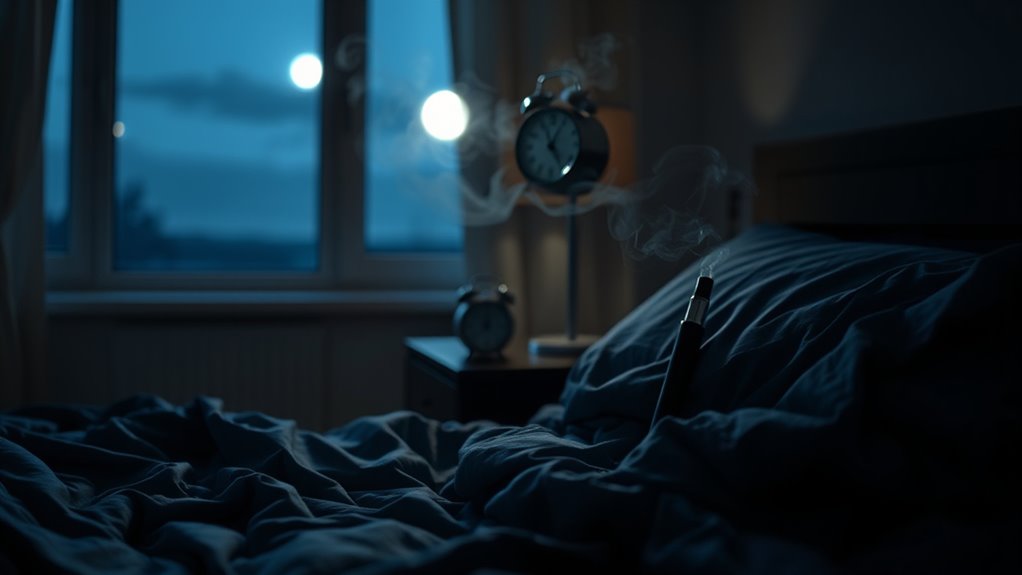
Vaping can seriously disrupt your sleep due to nicotine’s stimulating effects. It heightens alertness and interferes with your body’s ability to relax. Vaping before bed, even in small doses, makes it harder to drift off and can lead to lighter sleep. You may find yourself caught in a cycle of dependence, where you vape just to feel normal. Understanding these impacts is key for improving your rest. Discover more about how vaping habits influence your sleep.
Key Takeaways
- Nicotine acts as a stimulant, increasing alertness and making it harder to unwind before sleep.
- Vaping before bed heightens heart rate and disrupts the body’s natural sleep cycle.
- Frequent daytime vaping can create dependency, leading to ongoing sleep disturbances.
- Vaping in the sleep environment reinforces wakefulness and hinders relaxation.
- Even small doses of nicotine can significantly diminish sleep quality and duration.

While you might think vaping is just a trendy alternative to smoking, it can actually have a significant impact on your sleep quality. Many people overlook how their vaping habits can interfere with their nightly rest, often underestimating the effects of nicotine stimulation. When you vape, especially if you use products high in nicotine, you might be setting yourself up for a rough night’s sleep.
Nicotine acts as a stimulant, which means it can keep your brain alert and active. If you’re hitting your vape pen before bedtime, you may find it harder to unwind. Your body might not recognize that it’s time to relax, and as a result, you could struggle to fall asleep. This isn’t just anecdotal; research suggests that nicotine can disrupt your sleep patterns, leading to a lighter and less restorative sleep.
You might think that a few puffs before bed won’t hurt, but even small amounts of nicotine can have a lasting impact. Your vaping habits, particularly if they involve frequent use throughout the day, can lead to a cycle of dependence where you feel the need to vape just to feel normal. This cycle can mean you’re reaching for your vape at all hours, including when you should be winding down for the night.
Moreover, the timing of your vaping can also play an *essential* role. If you’re vaping right before bed, the nicotine stimulation can heighten your heart rate and increase your alertness, making it increasingly difficult to *switch* into sleep. You may notice that even after a long day, you still feel wired, unable to drift off, and this can lead to frustration and even anxiety as you struggle to catch those elusive Z’s.
In addition to the direct effects of nicotine, there’s also the consideration of how vaping can impact your overall sleep environment. If you’re vaping in bed, the act can create an association between your sleep space and stimulation rather than relaxation. This connection can further hinder your ability to sleep soundly.
Frequently Asked Questions
Can Vaping Cause Long-Term Sleep Disorders?
Yes, vaping can lead to long-term sleep disorders. When you use nicotine, you risk developing an addiction that disrupts your sleep patterns. This disruption can make it hard to fall asleep or stay asleep, resulting in poor sleep quality. Over time, these effects may contribute to chronic insomnia or other sleep-related issues. If you’re struggling with sleep, it might be worth considering how your vaping habits are affecting your rest.
Are There Specific Vaping Products That Impact Sleep More Than Others?
Certain vaping products can impact your sleep more than others, much like how a storm can disrupt a calm night. Devices with higher nicotine levels tend to affect your rest more markedly. Additionally, flavor additives can play a role; sweet or fruity flavors might lead to increased cravings, disturbing your sleep patterns. If you’re concerned about sleep issues, consider opting for products with lower nicotine and fewer additives to help promote better rest.
How Does Vaping Compare to Smoking Regarding Sleep Quality?
Vaping generally impacts sleep quality similarly to smoking, as both deliver nicotine, which can disrupt sleep hygiene. If you’re dependent on nicotine, you might find it harder to fall asleep or stay asleep, regardless of the method. While vaping may be perceived as less harmful, it still poses risks to your rest. Prioritizing good sleep hygiene, like reducing nicotine use before bed, can help improve your overall sleep quality.
Can Vaping Help With Sleep Issues for Some Individuals?
Imagine this: you’re winding down after a long day, and that familiar vaping ritual brings some comfort. For some people, vaping might help with sleep issues due to the nicotine relaxation effect. It can create a sense of calm, making it easier to drift off. However, it’s essential to remember that while it works for some, it may disrupt sleep for others. Experiment carefully to find what truly helps you.
What Are the Withdrawal Effects of Nicotine on Sleep Patterns?
Nicotine withdrawal can lead to significant sleep disruption. When you stop using nicotine, your body craves it, which can cause insomnia, restless nights, and increased wakefulness. You might find it harder to fall asleep or stay asleep due to heightened anxiety and irritability. These withdrawal symptoms can last for days or even weeks, impacting your overall sleep patterns. Prioritizing good sleep hygiene can help you cope during this challenging time.
Conclusion
In summary, if you’re vaping, it’s important to think about how nicotine might be impacting your sleep. Studies show that nearly 70% of regular vapers report sleep disturbances, which can lead to fatigue and reduced focus during the day. By understanding the connection between vaping and your rest, you can make more informed choices about your habits. Prioritizing quality sleep is essential for your overall well-being, so think twice before taking that next puff before bed!