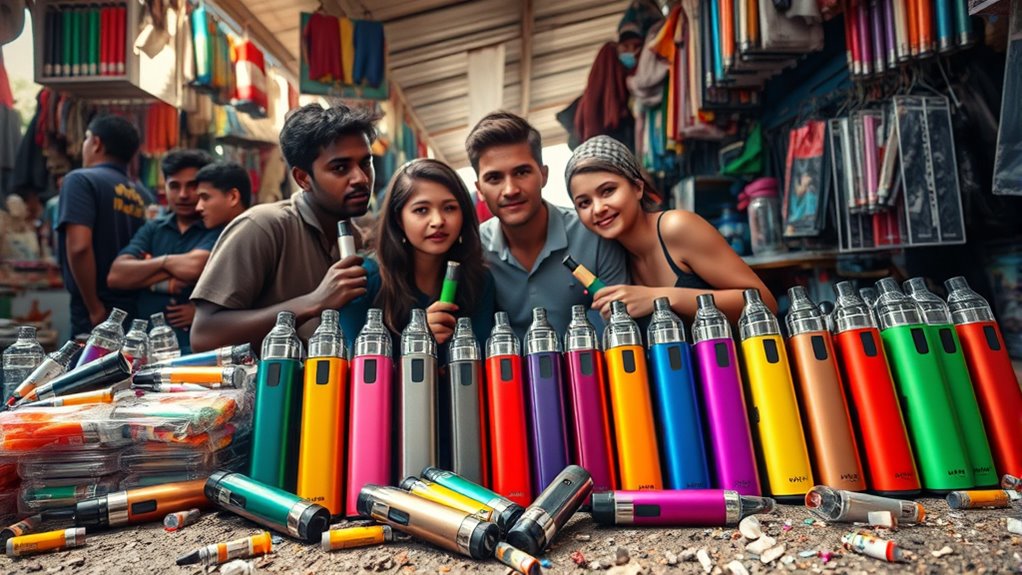

Disposable vapes are booming in developing countries thanks to their convenience and affordability. You’ll find them easily at local shops, enticing new users with minimal effort and cost. However, this growth isn’t without worries. The environmental impact is alarming; these devices contribute to pollution and waste. Additionally, a lack of regulations raises health and safety concerns. There’s much more to contemplate about this trend and its implications for the future.
Key Takeaways
- Disposable vapes are increasingly popular in developing countries due to their convenience and low cost, attracting new users rapidly.
- The environmental impact is significant, as discarded vapes contribute to pollution and take hundreds of years to decompose.
- Many developing countries lack strict regulations, leading to unregulated sales and potential health risks for consumers.
- The market is saturated with low-cost, low-quality disposable vapes, exacerbating waste and environmental concerns.
- There is a pressing need for sustainable alternatives and regulatory measures to balance market growth with environmental responsibility.
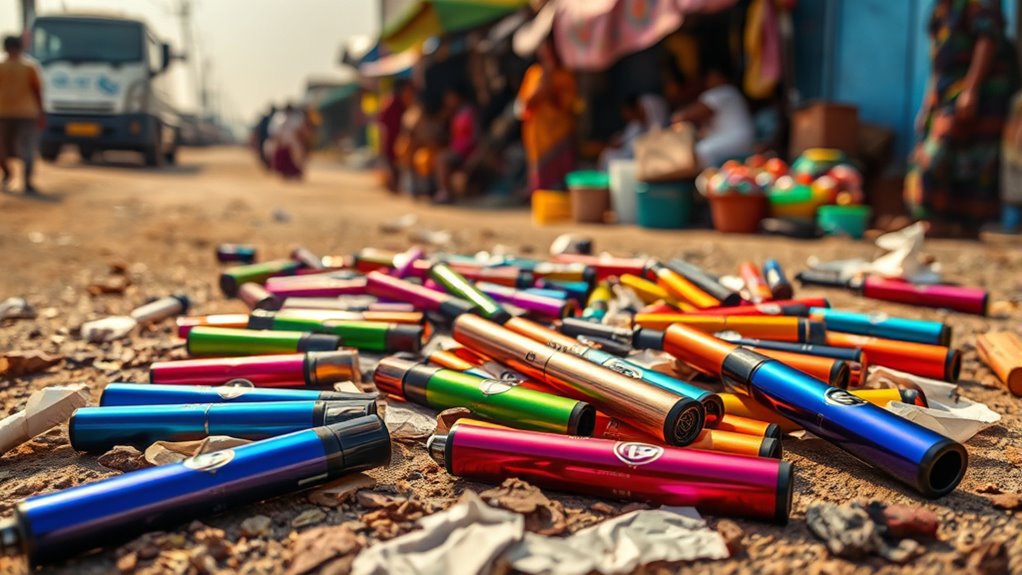
As disposable vapes gain popularity in developing countries, their appeal lies in convenience and accessibility. You might appreciate how easy it is to grab a vape and enjoy a quick puff without worrying about refills or maintenance. However, as you indulge in this modern trend, it’s essential to contemplate the broader implications, especially regarding environmental impact and regulatory challenges.
Disposable vapes often come with a significant environmental cost. When you toss a used vape into the trash, it doesn’t just disappear. The materials used—plastic, batteries, and electronic components—contribute to pollution and landfill waste. You might not think about it at the moment, but these devices can take hundreds of years to decompose, leaching harmful chemicals into the soil and water. In countries where waste management systems are still developing, this problem becomes even more pronounced. You may find that the convenience of a disposable vape is overshadowed by the long-term consequences it has on the environment.
Regulatory challenges further complicate the situation. Many developing countries lack stringent regulations to manage the sale and disposal of disposable vapes. You might notice how easily these products are available at local shops, often without any age restrictions or labeling requirements. This lack of oversight raises concerns about health risks and the potential for youth addiction. As governments scramble to catch up with the rapid rise of vaping, you may feel the effects of vague policies and inconsistent enforcement. It leaves consumers like you exposed to unregulated products that may not meet safety standards.
Moreover, the rapid growth of disposable vapes also poses an economic challenge. As demand rises, manufacturers flood the market with low-cost options, often prioritizing profit over quality. You might find yourself purchasing cheaper vapes that not only fail to deliver a satisfying experience but also contribute to more waste. This cycle can lead to a disposable culture where even the act of vaping becomes synonymous with wastefulness. As environmental impact continues to be a crucial concern, it’s important to consider sustainable alternatives that could mitigate these issues.
disposable vape eco-friendly alternatives
As an affiliate, we earn on qualifying purchases.
As an affiliate, we earn on qualifying purchases.
Frequently Asked Questions
Are Disposable Vapes Safe for Youth in Developing Countries?
Disposable vapes aren’t safe for youth, especially with aggressive disposable vape marketing targeting them. These products often contain high levels of nicotine, which can lead to addiction and negatively affect brain development. You should be aware of the risks and educate young people about the potential harms of youth vaping. Encouraging healthier habits and discussing the dangers of vaping can help protect their health and well-being in the long run.
What Are the Environmental Impacts of Disposable Vapes?
Disposable vapes contribute markedly to environmental pollution due to improper waste management. When you discard them, they often end up in landfills, releasing harmful chemicals into the soil and water. Their plastic components take years to decompose, exacerbating the plastic waste crisis. You might not realize that these devices also increase electronic waste, which poses further challenges for recycling and disposal. It’s vital to think about the environmental impact before using disposable vapes.
How Do Disposable Vapes Compare to Traditional Cigarettes in Health Risks?
Disposable vapes generally have fewer harmful chemicals compared to traditional cigarettes, but they still pose health risks. The chemical composition of vape liquids often includes nicotine, flavorings, and other substances that can affect your lungs and heart. While you might avoid tar and some carcinogens found in cigarettes, the long-term health implications of vaping aren’t fully understood. It’s essential to weigh these factors if you’re considering either option for nicotine consumption.
Can Disposable Vapes Lead to Nicotine Addiction in Non-Smokers?
Yes, disposable vapes can lead to nicotine addiction in non-smokers. Imagine someone trying a sweet, fruity vape for fun, only to find themselves craving it later. This initial curiosity can spiral into nicotine dependence, as the brain starts to associate vaping with pleasure. Behavioral addiction may kick in, making it hard to resist the urge to vape again. So, that casual puff can quickly turn into a struggle against addiction.
What Regulations Exist for Disposable Vapes in Developing Countries?
In many developing countries, regulations for disposable vapes vary widely. Some nations implement market regulation to control sales, age restrictions, and product standards, while others lack legal enforcement altogether. You might find that certain regions impose taxes or require licenses for vendors. However, inconsistent application of these rules can lead to gaps in protection, making it essential for you to stay informed about local laws and regulations regarding disposable vapes.

Alcedo 1 Quart Sharps Container (1-Pack) for Needle & Syringe Disposal
- Durable Construction: Puncture and impact resistant material
- Versatile Use: Suitable for hospitals, labs, clinics, and home
- Portable and Compact: Lightweight, small size for easy transport
As an affiliate, we earn on qualifying purchases.
As an affiliate, we earn on qualifying purchases.
Conclusion
As disposable vapes continue to surge in popularity across developing countries, it’s essential to weigh the benefits against the potential risks. While they may seem like a modern-day magic wand for smokers looking to quit, the environmental impact and health concerns can’t be ignored. It’s up to you to advocate for responsible usage and support initiatives that promote sustainability. After all, we wouldn’t want future generations to inherit a world filled with plastic clouds, would we?

MobileDetect Pouch Residue Detection Multi-Drug Test Kit – Rapid Surface Residue Detector
- Simple pouch design: Provides quick presumptive results
- Portable handheld device: No calibration required
- Sealed system: Prevents contamination
As an affiliate, we earn on qualifying purchases.
As an affiliate, we earn on qualifying purchases.

!Si Bonus Bundle – Flavoured Air Device (with 12 Flavour Cores) Plus Bonus 3 Pack of Assorted Flavours (9 Cores) – Non-Electronic Nicotine-Free Stop Smoking Stop Vaping Aid
- Herbal, Nicotine-Free Inhaler: Italian-inspired, non-addictive, flavored air device
- Guilt-Free Taste and Aroma: Pleasurable, satisfying cravings without nicotine
- Premium, Durable, Reusable Design: Safe, easy to clean, portable, no special storage needed
As an affiliate, we earn on qualifying purchases.
As an affiliate, we earn on qualifying purchases.