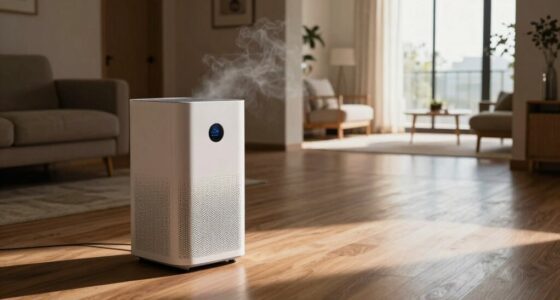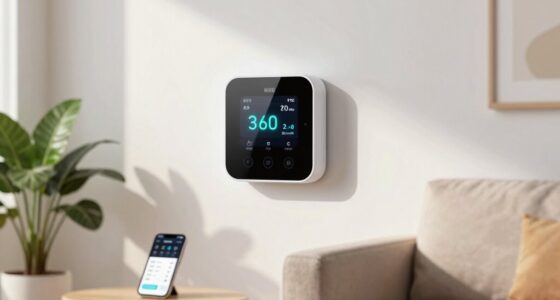
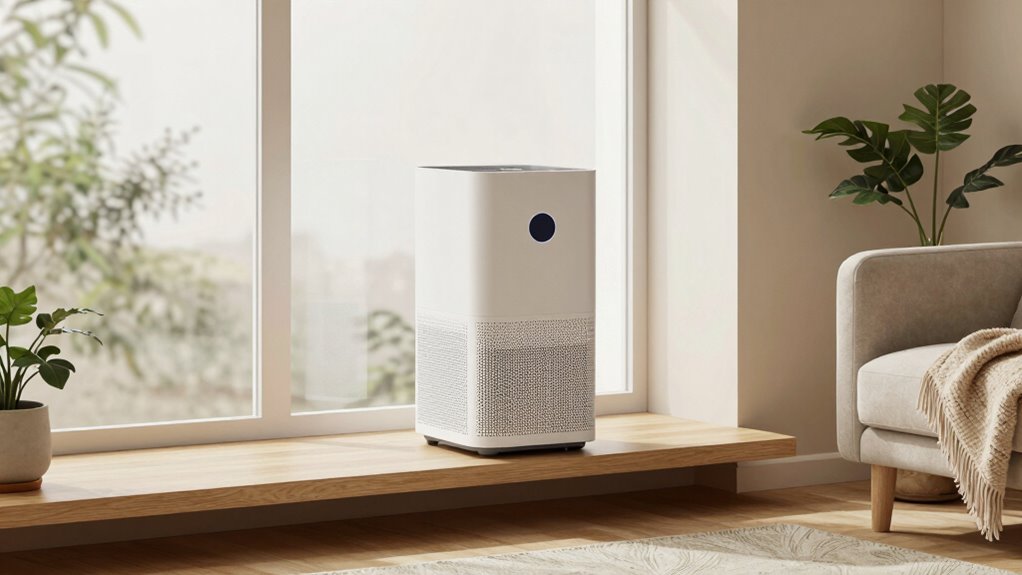

To get the most from your air purifier, place it centrally in your room, away from corners, windows, and doors. Keep it on a small table or shelf to improve airflow and elevate the device. Maintain some space between furniture and walls so air can circulate freely. Avoid placing it near electronic devices that emit heat or interference. For more tips on optimizing your air quality setup, you’ll find helpful strategies in the next section.
Key Takeaways
- Place the purifier centrally to promote even air circulation throughout the small room.
- Elevate the device on a small table or shelf to improve airflow and air delivery.
- Keep it away from corners, windows, and doors to prevent airflow restrictions and outdoor pollutants.
- Maintain distance from large furniture to avoid blocking intake and outlet vents.
- Position it away from electronic devices that generate heat or electromagnetic interference for optimal performance.
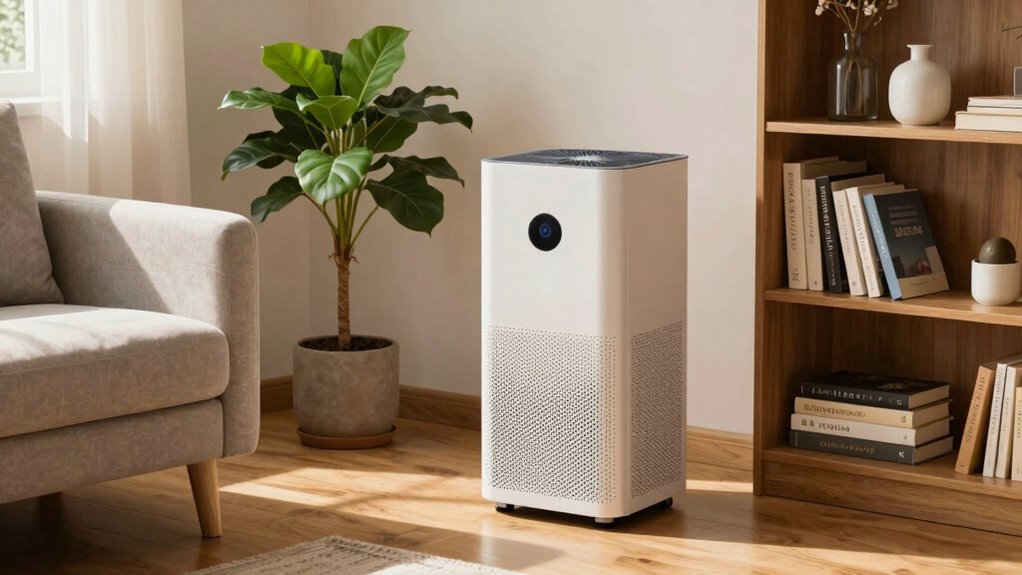
If you want your air purifier to work effectively in a small room, placing it in the right spot is vital. The goal is to maximize airflow optimization, which means positioning the device where it can circulate air freely and efficiently. Start by avoiding corners or tight spaces, as these areas can restrict airflow and reduce the purifier’s ability to clean the air properly. Instead, place it somewhere central, where it can pull in contaminated air from different parts of the room and distribute clean air evenly. Furniture placement plays a significant role in this process. Keep large furniture pieces, like beds, sofas, or bookshelves, a few feet away from the purifier. If furniture blocks the intake or outlet vents, airflow becomes compromised, and the purifier struggles to do its job. It’s also helpful to elevate the device slightly, such as on a small table or shelf, so that air can circulate around it without obstruction. This position helps guarantee that the purifier isn’t working against furniture that might trap or divert airflow. Lighting, windows, and other electronics can influence where you position your air purifier. For example, placing it near an open window might seem logical, but outdoor pollutants could enter and overwhelm the device, reducing its effectiveness. Instead, keep it away from windows and doors to prevent cross-contamination. Similarly, avoid placing the purifier near electronic devices that generate heat or electromagnetic interference, which may interfere with its sensors or operation. Another vital element is the distance from your breathing zone. Position the purifier at a height where you’re most likely to breathe comfortably, typically around eye level or slightly below. This ensures that the clean air is delivered directly to your breathing zone, especially if you spend a lot of time in a specific part of the room. Remember, the goal is to create a zone of purified air that overlaps with your usual sitting or sleeping area. Adjusting furniture placement to open pathways allows air to circulate more freely, which can enhance air quality and make the purifier more effective. Incorporating airflow patterns into your positioning strategy can significantly improve the overall air circulation and effectiveness of the purifier. By combining thoughtful positioning with furniture placement and airflow optimization, you’ll make the most of your air purifier’s capabilities, keeping your small room fresh, healthy, and comfortable.
As an affiliate, we earn on qualifying purchases.
Frequently Asked Questions
How Often Should I Replace the Air Purifier Filters?
You should replace your air purifier filters based on the filter lifespan recommended by the manufacturer, typically every 3 to 6 months. Adhere to a regular maintenance schedule to guarantee peak performance. Keep an eye out for signs like decreased airflow or lingering odors, which suggest it’s time for a change. Regular filter replacements help your air purifier work efficiently and maintain a healthier environment in your small room.
Can an Air Purifier Eliminate All Types of Indoor Odors?
An air purifier isn’t a magic wand, but it does a great job at odor elimination, especially in small rooms. It can tackle many indoor odors like pet smells, cooking fumes, and smoke, improving air quality considerably. However, some stubborn or chemical odors might need specialized filters or ventilation. Think of it as a trusty shield that keeps most bad smells at bay, but not all.
Is It Safe to Run an Air Purifier 24/7?
Yes, it’s safe to run an air purifier 24/7 if you guarantee good air quality and proper filter maintenance. Continuous operation helps maintain cleaner indoor air, especially in small rooms. Just check and replace filters as recommended by the manufacturer, and keep the purifier away from moisture or heat sources. Doing so guarantees the device functions effectively without risks, providing consistent air purification for your space.
Do Air Purifiers Produce Any Harmful Ozone?
Air purifiers can produce some ozone emissions, especially models with ionizing features. However, many modern purifiers prioritize filter safety and minimize ozone output, making them safe for your home. To avoid harmful ozone exposure, choose units labeled as ozone-safe or low-emission. Always follow manufacturer instructions, and guarantee proper ventilation. This way, you benefit from cleaner air without risking health issues caused by ozone emissions.
How Loud Are Most Air Purifiers During Operation?
Most air purifiers operate quietly, with noise levels typically between 25 to 50 decibels, comparable to a soft whisper or gentle conversation. During high-speed settings, they can reach around 60 decibels, similar to background conversation in a busy restaurant. If noise bothers you, choose models with adjustable fan speeds, as lower settings provide quieter operation while still cleaning the air effectively.
As an affiliate, we earn on qualifying purchases.
Conclusion
Now, picture your small room as a sanctuary—air swirling gently around, fresh and clean. Placing your air purifier near the center or a natural airflow source guarantees every breath feels lighter, clearer, and more invigorating. Think of it as a quiet guardian, silently working to keep toxins at bay while sunlight filters in, casting warmth on your space. With the right spot, you transform your room into a haven of pure, crisp air—ready to refresh your mind and body.
best placement for air purifier in small room
As an affiliate, we earn on qualifying purchases.
As an affiliate, we earn on qualifying purchases.
air purifier with adjustable height
As an affiliate, we earn on qualifying purchases.
As an affiliate, we earn on qualifying purchases.
Halloween Picks
halloween
As an affiliate, we earn on qualifying purchases.