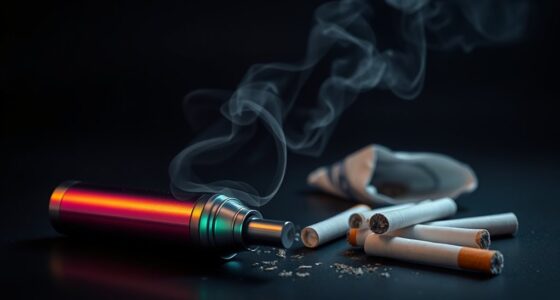


EVALI, or e-cigarette or vaping product use-associated lung injury, refers to serious lung issues caused by vaping. It’s linked to harmful chemicals like nicotine and THC, particularly with additives like vitamin E acetate. Symptoms include shortness of breath, chest pain, and fever, requiring immediate medical attention. Preventing EVALI involves being aware of the risks presented by unregulated products. By understanding these factors, you can make informed choices about vaping and its health implications. There’s more to uncover about this topic.
Key Takeaways
- EVALI, or e-cigarette or vaping product use-associated lung injury, emerged in 2019 due to severe respiratory issues linked to vaping.
- Symptoms include shortness of breath, chest pain, cough, and fever, requiring immediate medical attention if experienced.
- Common causes of EVALI include harmful chemicals in vaping products, such as vitamin E acetate found in some THC vapes.
- Long-term vaping poses broader health risks, including chronic bronchitis and cardiovascular issues, beyond just EVALI.
- Awareness of unregulated products and their potential dangers is essential for making informed decisions about vaping and health.

EVALI Explained
Have you ever wondered what EVALI really means? EVALI stands for “e-cigarette or vaping product use-associated lung injury.” It’s a term that emerged to describe a serious health crisis linked to vaping. If you think vaping is a safe alternative to smoking, you might want to reconsider. The vaping dangers are more significant than many realize, and EVALI is just one alarming example of the health risks involved.
When you vape, you’re inhaling aerosolized substances that can contain various harmful chemicals, including nicotine, THC, and flavoring agents. Many of these chemicals can cause inflammation and damage to your lungs. EVALI was first identified in 2019, and since then, reports have shown that a considerable number of individuals have experienced severe respiratory issues after using vaping products. You might ask yourself how this could happen, and the answer lies in the often unregulated nature of the vaping industry.
Many products marketed as “safe” can still contain harmful additives. For instance, vitamin E acetate, a thickening agent found in some THC vape products, has been directly linked to EVALI cases. If you’re using these products, you’re unknowingly putting yourself at risk for serious lung injuries. Symptoms of EVALI can include shortness of breath, chest pain, cough, and even fever. If you experience any of these symptoms after vaping, it’s vital to seek medical attention immediately.
Many vaping products may seem safe but can contain dangerous additives like vitamin E acetate, putting users at risk for serious lung injuries.
The health risks of vaping don’t stop at EVALI. Long-term use can lead to chronic bronchitis, decreased lung function, and cardiovascular issues. These dangers aren’t just limited to those who use THC or nicotine; even flavored vape products can pose risks. You might think that fruit or candy-flavored vapes are harmless, but they can still lead to significant health complications over time.
Being informed is your best defense against these dangers. If you’re considering vaping as a safer alternative to smoking, take a moment to think about the potential consequences. There’s a growing body of evidence that suggests vaping isn’t the benign option it’s often portrayed to be. Understanding the realities of EVALI and the broader health risks associated with vaping can empower you to make safer choices for your health. Additionally, cybersecurity vulnerabilities can increase during health crises, making it crucial to stay informed about both health and safety risks. You deserve to know the truth about what you’re putting into your body, so take a step back and consider: is vaping really worth the risk?
Frequently Asked Questions
Can EVALI Affect Non-Smokers or Occasional Users?
Yes, EVALI can affect non-smokers and occasional users. Even if you’re not a regular smoker, using vape products can expose you to harmful substances, increasing your risks. Occasional use doesn’t mean you’re immune; the chemicals in vape liquids can lead to serious lung issues. It is crucial to be aware of these implications, as even infrequent exposure can have lasting effects on your health. Prioritize your well-being by making informed choices.
Is There a Specific Age Group More Prone to EVALI?
Yes, youth, particularly adolescents, are more prone to EVALI. Their vulnerability stems from developmental factors that increase risk-taking behaviors. Many young people experiment with vaping without fully understanding the potential dangers. Studies show that adolescents have a higher likelihood of experiencing adverse effects from these products, which can lead to serious health issues. So, if you’re part of this age group, it’s essential to be aware and cautious about vaping risks.
What Is the Long-Term Outlook for EVALI Patients?
The long-term outlook for EVALI patients can vary markedly. Some may recover fully, while others might experience chronic lung damage that impacts their daily lives. You could also face mental health challenges as a result of your illness, affecting your overall well-being. Regular follow-ups with healthcare providers are essential to monitor lung function and address any psychological effects. Staying informed and proactive about your health can help you manage these long-term outcomes effectively.
Are Certain Vaping Products More Dangerous Than Others?
Certain vaping products can indeed be more dangerous than others. Think of them as a ticking time bomb; some devices lack ingredient transparency, hiding harmful substances. You should prioritize vaping device safety by choosing products from reputable brands that clearly list their ingredients. This way, you can avoid the hidden dangers lurking in poorly made devices. Always remember, not all clouds are harmless; some can carry a storm of health risks.
How Can I Support Someone Recovering From EVALI?
To support someone recovering from EVALI, start by offering emotional support. Let them know you’re there to listen and encourage their feelings. Help them find recovery resources, like support groups or counseling services, to guide them through the process. Engage in healthy activities together, whether it’s exercising or cooking nutritious meals. Your presence can make a significant difference, so stay patient and understanding as they navigate their recovery journey.
Conclusion
In summary, understanding EVALI is essential for your health and safety. With nearly 2,800 cases reported in the U.S. since 2019, it’s clear that vaping can carry serious risks. By recognizing the symptoms and being aware of the potential causes, you can make informed choices and protect yourself. Remember, prevention is key—staying educated about what you’re inhaling can save you from serious health issues. Stay safe and informed!