

Natural flavors come from sources like fruits and spices, while artificial flavors are chemically made. Both are used to enhance food taste, but natural flavors often create a “cleaner label” and are seen as more wholesome. On the flip side, artificial flavors offer consistency and lower costs, which can appeal to manufacturers. It’s important to know how these flavors can impact your food choices and health, so stick around for more insights on this topic.
Key Takeaways
- Natural flavors come from plant or animal sources, while artificial flavors are synthetically produced in labs using chemical compounds.
- Both types of flavors must meet FDA safety standards, ensuring they are safe for consumption.
- Natural flavors are often used for a “cleaner label” perception, whereas artificial flavors are favored for consistency and lower costs.
- Consumers generally view natural flavors as healthier, though both types can affect dietary intake of sugars and fats.
- Understanding flavor sources helps consumers make informed choices aligned with their health and taste preferences.
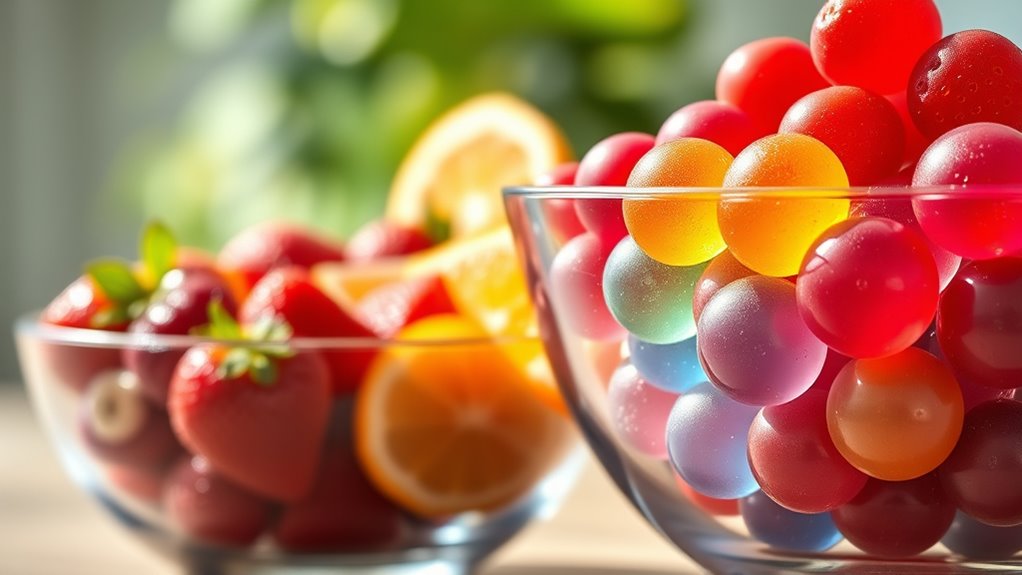
When you bite into your favorite snack, have you ever wondered about the flavors that make it so delicious? The taste sensations you experience often come from a mix of natural and artificial flavors, both of which play a significant role in the food industry. Understanding the difference between these two types of flavors can help you make informed choices about what you eat and how it affects your body.
Natural flavors are derived from plant or animal sources. They undergo flavor extraction processes that isolate specific compounds responsible for taste and aroma, allowing manufacturers to enhance the flavor profile of their products. Regulatory standards, set by organizations like the FDA, ensure that these natural flavors are safe for consumption. You might find natural flavors in everything from fruit juices to baked goods, often listed simply as “natural flavors” on ingredient labels. While they are considered more wholesome by many, it’s vital to note that the term “natural” doesn’t always equate to a healthier option.
On the flip side, artificial flavors are synthetically produced and designed to mimic the taste of natural ingredients. These flavors can be crafted in a lab using chemical compounds, and they often provide a more intense flavor experience at a lower cost. While they may not come from nature, artificial flavors also adhere to regulatory standards, ensuring they are safe for human consumption. You’ll find them in many processed foods, from candies to sodas. Although they’re generally recognized as safe, some people prefer to avoid them due to potential health concerns or dietary restrictions.
So, why do manufacturers use one over the other? Natural flavors often appeal to consumers looking for a cleaner label, while artificial flavors can offer consistency and affordability. However, it’s vital to remember that both types of flavors can contribute to your overall intake of sugars, fats, and other ingredients.
Next time you indulge in a snack, take a moment to check the label. Understanding the source of the flavors can deepen your appreciation for the complexity of what you’re eating. Whether you prefer natural or artificial, knowing what goes into your food empowers you to make choices aligned with your health and taste preferences.
Frequently Asked Questions
Are Artificial Flavors Safe for Consumption?
Yes, artificial flavors are generally safe for consumption. Regulatory agencies guarantee they’re tested and approved before reaching your plate. However, you should pay attention to ingredient sourcing, as some artificial flavors might be derived from less desirable sources. Flavor masking can also play a role; if the flavor’s meant to hide unwanted tastes, it’s good to be mindful of the overall product. Always read labels to make informed choices about what you eat.
How Are Natural Flavors Extracted From Sources?
Think of flavor extraction like an artist choosing the perfect colors for a masterpiece. You start with a source, like fruits or herbs, and use methods like steam distillation or cold pressing to draw out the essence. This process highlights source differentiation, ensuring you capture the unique characteristics of each ingredient. You’re left with natural flavors that can elevate your dishes, bringing them to life with vibrant, aromatic notes. It’s nature’s artistry at its finest!
Do Natural Flavors Have Any Nutritional Value?
Natural flavors don’t really have any significant nutritional value. Their primary role is to enhance flavor composition in foods, rather than provide essential nutrients. While they may come from fruits, spices, or other natural sources, the extraction process often removes much of the nutritional content. So, if you’re looking to boost your diet, focus on whole foods instead of relying on the flavoring agents for nutrition.
Can Artificial Flavors Trigger Allergies?
Yes, artificial flavors can trigger allergies in some individuals, especially if they have sensitivities to specific ingredients used in the flavoring process. While these flavors often mask undesirable tastes, they might also contain pesticide residues, which could exacerbate allergic reactions. It’s essential to read labels carefully if you know you have allergies, as hidden components in artificial flavors can sometimes lead to unexpected health issues. Always prioritize your safety and well-being.
What Regulations Govern Flavor Labeling on Food Products?
Have you ever wondered how flavor labeling works? Regulations like the Food and Drug Administration (FDA) guidelines guarantee labeling transparency. These standards require manufacturers to clearly list ingredients, including flavors, on food products. They must specify whether flavors are natural or artificial, helping you make informed choices. Additionally, any flavor additives need to comply with safety assessments, ensuring that what you consume meets regulatory standards for health and safety.
Conclusion
In summary, while natural and artificial flavors both enhance our food, they come from different sources and have unique impacts on taste and health. Did you know that about 80% of the flavors we experience come from our sense of smell? This highlights how vital both types of flavors are in shaping our culinary experiences. So next time you savor a dish, consider the flavor’s origin and how it influences your enjoyment of that meal!