
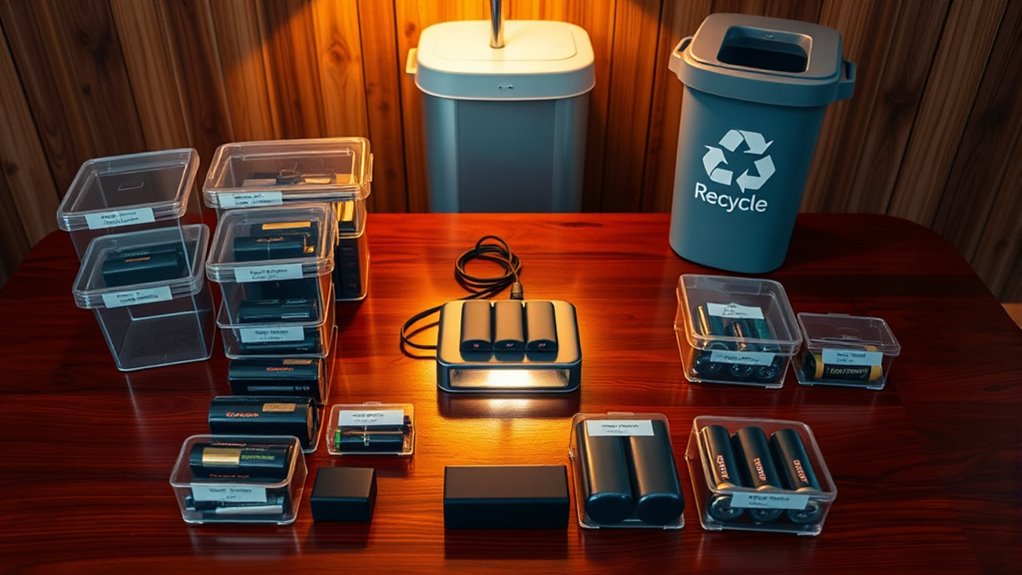

To keep your lithium-ion batteries safe, always use the original charger and avoid overcharging, which can lead to overheating. Store batteries in a cool, dry place, away from direct sunlight and flammable materials. Never throw batteries in the trash; instead, use designated recycling facilities to prevent environmental harm. Handling batteries properly can greatly reduce risks of fire or leakage, and there’s more you should know to guarantee maximum battery safety.
Key Takeaways
- Always use the original charger to prevent overcharging and overheating of lithium-ion batteries.
- Store batteries in a cool, dry place away from direct sunlight to maintain safety and extend lifespan.
- Avoid disposing of batteries in regular trash; use designated recycling facilities to prevent environmental contamination.
- Monitor devices while charging to detect any signs of overheating or damage early.
- Handle batteries carefully and follow manufacturer guidelines for charging, storage, and disposal.

When it comes to using batteries in everyday devices, understanding safety basics is essential. You rely on batteries to power everything from your smartphone to your electric toothbrush, but not all batteries are created equal. Familiarizing yourself with various battery chemistries can help you make informed choices and keep you safe. For example, lithium-ion batteries are widely used due to their high energy density and rechargeability. However, they come with specific hazards that you should be aware of.
One of the main lithium-ion hazards is the risk of overheating or catching fire if they’re damaged or improperly charged. You’ve probably heard stories about phones or laptops bursting into flames. This usually happens when the battery gets punctured or if there’s a manufacturing defect. To avoid these situations, always use the charger that comes with your device, as it’s designed to manage the battery’s charging cycle effectively. Overcharging can lead to excessive heat, which further increases the risk of thermal runaway, where the battery may explode or ignite.
Proper storage of batteries is another critical aspect of safety. Storing batteries in extreme temperatures, whether hot or cold, can compromise their integrity. Ideally, keep them in a cool, dry place, away from direct sunlight. If you’re not going to use a device for an extended period, consider removing the batteries. This simple step can prevent leakage, which can damage the device and pose health risks. Fresh lemon juice typically lasts only 2-3 days in the fridge, highlighting the importance of proper storage for different products.
When it comes to battery disposal, it’s essential to know how to do it responsibly. Many people toss batteries in the trash without a second thought, but that can be harmful to the environment. Batteries contain toxic chemicals that can leak into the soil and water supply. Instead, look for designated recycling facilities or drop-off locations that accept batteries. Many stores also offer recycling services, making it easier for you to dispose of them safely.
Frequently Asked Questions
Can I Use Any Charger for My Battery-Powered Devices?
No, you can’t use just any charger for your battery-powered devices. Charger compatibility is essential for safe charging. Using an incompatible charger can damage your device or lead to safety hazards like overheating. Always check the specifications of both your device and charger to make certain they match. If you’re unsure, stick to the original charger or a certified replacement to maintain charging safety and protect your investment.
How Long Should I Charge My Battery for Optimal Performance?
Picture your device, glowing softly as it powers up; for ideal performance, you should charge your battery for about 2 to 4 hours, depending on the type. This charging time helps maximize the battery lifespan, ensuring it stays healthy and efficient. Don’t let it sit too long after reaching full charge, though—overcharging can damage its energy. Treat your battery well, and it’ll reward you with reliable performance day after day.
What Are the Signs of a Damaged Battery?
You’ll notice several signs of a damaged battery. Look out for battery corrosion, which appears as a white or greenish residue around the terminals. If you see your battery swelling, it’s a clear indication of trouble; they shouldn’t expand or bulge. Additionally, if your device isn’t powering up or holds a charge poorly, it’s time to contemplate replacing the battery. Always prioritize safety when dealing with damaged batteries.
Is It Safe to Leave Batteries in Devices When Not in Use?
Leaving batteries in devices when they’re not in use is like letting a flower wilt in the shade; it can shorten battery life and lead to leaks. You want to nurture your devices, so remove batteries when they’re idle. This simple act promotes better device maintenance and guarantees your gadgets stay healthy. Just like a gardener tends to their plants, caring for your batteries will keep them blooming longer.
Can I Recycle Batteries at Home?
You can’t recycle batteries at home, as improper disposal can be hazardous. Instead, look for local recycling programs or drop-off centers that accept batteries. Many retailers and community events also offer battery disposal options. Make sure to check the guidelines for your specific battery types, as some may require special handling. Keeping batteries out of landfills is essential for the environment, so always opt for proper battery disposal methods.
Conclusion
By following these battery safety basics, you’re not just protecting yourself; you’re creating a safer environment for everyone. Imagine batteries stored neatly in a cool, dark space, like a well-organized toolbox, ready for use without danger. Picture yourself responsibly disposing of old batteries, ensuring they don’t pollute the earth, like a gentle rain nourishing the soil. With these simple practices, you’re not only safeguarding your devices but also contributing to a healthier planet. Stay safe and be mindful!