
To compare HEPA and carbon filtration accurately, start by evaluating your main air quality concerns—particles or odors. Check if the filters are true HEPA or activated carbon, and review their specifications and coverage. Consider maintenance needs and replacement costs to judge long-term effectiveness. Combining both filters offers broader protection but may increase expenses. By understanding these key differences, you can make a more informed choice—if you keep exploring, you’ll discover how to optimize your air purity.
Key Takeaways
- Identify your primary air quality concern: particles, odors, or VOCs, to determine if HEPA or carbon filters are more suitable.
- Check the specifications for true HEPA efficiency (over 99.97% at 0.3 microns) and activated carbon capacity.
- Evaluate the filter lifespan and maintenance requirements to ensure consistent performance over time.
- Consider combining both filters for comprehensive air cleaning, but weigh the higher cost and maintenance needs.
- Review ease of filter replacement features and maintenance access to ensure proper upkeep and sustained effectiveness.
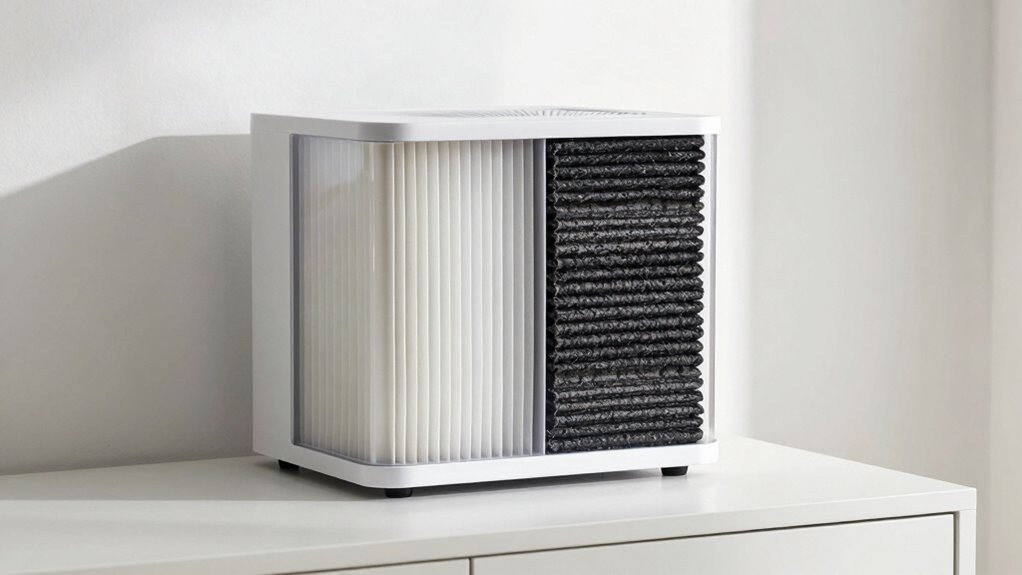
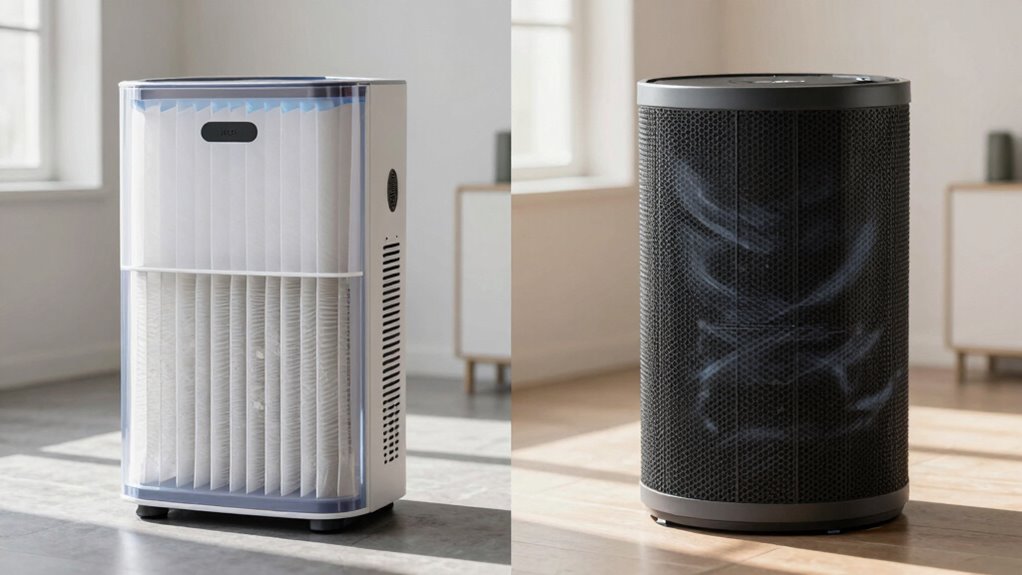
When choosing an air purifier, understanding the differences between HEPA and carbon filtration is vital. These two types of filters serve different purposes, and knowing how they impact air quality helps you select the right device for your needs. HEPA filters excel at capturing tiny particles like dust, pollen, pet dander, and smoke. They trap over 99.97% of particles as small as 0.3 microns, making them ideal if allergies or asthma are concerns. Carbon filters, on the other hand, specialize in removing gases, odors, and volatile organic compounds (VOCs). They absorb smells from cooking, pets, tobacco smoke, and other airborne chemicals, improving overall air quality in ways a HEPA filter can’t match.
To compare these filters effectively, think about what air issues you want to address most. If airborne particles are your primary concern, a HEPA filter will markedly improve air quality by removing allergens and pollutants that can trigger reactions. However, if odors, chemical fumes, or VOCs are more problematic, a carbon filter will be more advantageous. Some air purifiers combine both filters, offering broad-spectrum cleaning but often at a higher price. When evaluating models, check the specifications to see if they include a true HEPA filter and a dedicated activated carbon component, ensuring you’re getting the coverage you need. Additionally, understanding air quality factors can help you make a more informed choice tailored to your environment. Recognizing the filter lifespan is also crucial, as it influences maintenance frequency and overall cost. Regularly assessing your environment can help determine whether a combination filter setup is necessary for optimal results.
Another important factor to contemplate is filter maintenance. HEPA filters generally need replacing every 6 to 12 months, depending on usage and air quality. A clogged or dirty HEPA filter loses efficiency, so regular upkeep is vital for maintaining ideal air quality. Carbon filters require more frequent replacement, typically every 3 to 6 months, because they become saturated with odors and chemicals over time. If you neglect filter maintenance, airflow can decrease, and the purifier’s effectiveness drops, meaning you’re not getting the full benefit of your investment. Regularly checking the filter indicator can help ensure timely replacements and optimal performance. It’s also helpful to consider models with easy-to-replace filters to simplify ongoing maintenance. When comparing models, look for filters that are easy to access and replace, and consider how often you’ll need to perform maintenance based on your environment. Proper filter replacement not only maintains air quality but also extends the lifespan of your device.
In the end, the right choice depends on your specific air quality needs and your willingness to perform regular filter upkeep. By understanding how HEPA and carbon filters differ and what they target, you avoid guesswork and make an informed decision. Whether you’re battling airborne allergens or persistent odors, knowing these differences guarantees you select an air purifier that truly improves your indoor air quality. Remember, the key isn’t just choosing the right filter but also maintaining it properly for ongoing health benefits. Investing in a model with easy maintenance features can save you time and ensure consistent performance over time.
As an affiliate, we earn on qualifying purchases.
Frequently Asked Questions
Which Filtration Method Is More Cost-Effective Long-Term?
HEPA filters tend to be more cost-effective long-term because they generally have a longer filter lifespan and lower installation costs. While carbon filters may initially cost less, they need frequent replacements to maintain effectiveness, increasing ongoing expenses. You should consider how often filters need changing and installation costs when choosing. Overall, HEPA filters save you money over time by reducing maintenance and replacement frequency.
How Do HEPA and Carbon Filters Perform Against Odors?
Did you know carbon filters can remove up to 99% of odors? When it comes to air purification, HEPA filters excel at capturing airborne particles but don’t do much for smells. Carbon filters actively absorb odors and volatile organic compounds, making them ideal for odor control. Keep in mind, filter lifespan varies; carbon filters need replacements more often, but their odor removal performance makes them worth the upkeep.
Can Both Filters Be Used Simultaneously?
Yes, you can use both filters simultaneously, enhancing air purification. When doing so, consider filter lifespan, as combined use might require more frequent replacements. Installation complexity varies: HEPA filters are straightforward, but adding carbon filters might need extra setup. Using both filters together effectively captures particles and odors, providing cleaner air. Just verify your air purifier is designed for dual filters and follow the manufacturer’s guidelines for installation and maintenance.
What Maintenance Is Required for Each Filter Type?
You need to regularly check the filter lifespan and replace each filter type accordingly. HEPA filters typically last 6 to 12 months, depending on usage and air quality, requiring replacement when they become clogged. Carbon filters usually need changing every 3 to 6 months to maintain effectiveness. Keep an eye on signs of dirt buildup or reduced airflow, and follow manufacturer guidelines for peak maintenance and performance.
Are HEPA and Carbon Filters Eco-Friendly Options?
While HEPA filters are often more eco-friendly due to their longer filter lifespan and ability to trap tiny particles, carbon filters can be less sustainable because they need frequent replacement and often involve more waste. Both improve air quality, but if you’re eco-conscious, HEPA filters generally have a smaller environmental footprint over time. Consider your air quality needs and filter lifespan to choose the greener option.
Activated carbon air filter replacement
As an affiliate, we earn on qualifying purchases.
As an affiliate, we earn on qualifying purchases.
Conclusion
Now that you know how to compare HEPA and carbon filtration, you can confidently choose the right system for your needs. Think of it like wielding a superhero’s shield—protecting your air with the precision of a laser beam. Whether you need the unstoppable force of HEPA or the versatile power of carbon, you’re equipped to make an informed decision. Your home will become a fortress of fresh, clean air, unrivaled by anything else out there.
HEPA and carbon filter combo air purifier
As an affiliate, we earn on qualifying purchases.
As an affiliate, we earn on qualifying purchases.
Air purifier for allergies and odors
As an affiliate, we earn on qualifying purchases.
As an affiliate, we earn on qualifying purchases.
Fall Picks
fall essentials
As an affiliate, we earn on qualifying purchases.