
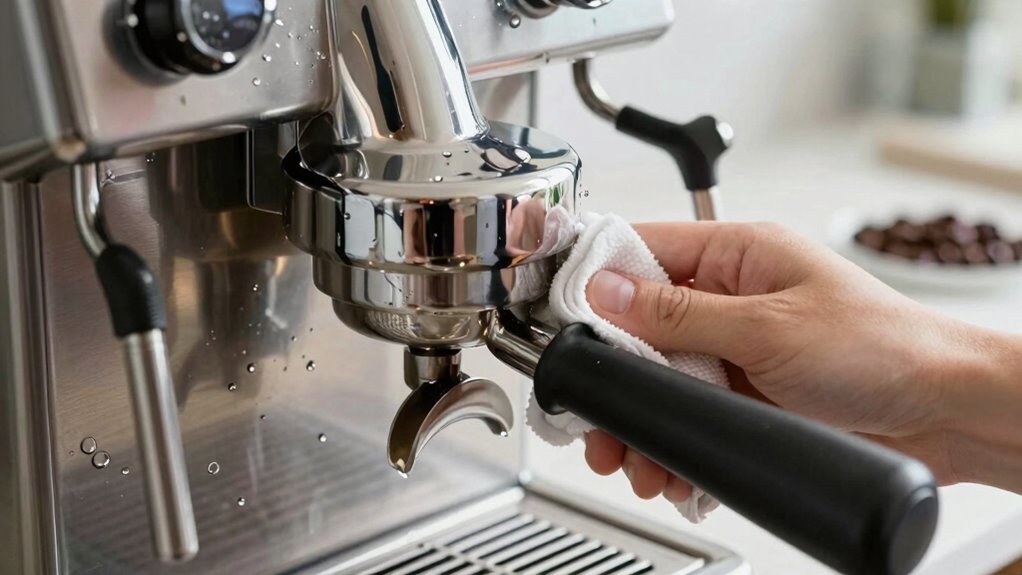

The one cleaning habit that improves flavor fast is wiping down your kitchen surfaces, including countertops, cutting boards, and utensils, after each use. Residues, oils, and leftover food particles can build up quickly and taint your dishes’ taste if not cleaned promptly. Regularly disinfecting these areas prevents bacteria and mold growth, preserving the natural flavors of your ingredients. Stay with us to discover simple steps that make your kitchen both safer and more delicious.
Key Takeaways
- Clean and sanitize cutting boards immediately after use to prevent flavor transfer and bacterial buildup.
- Wipe down countertops and utensils thoroughly after each task to eliminate residue and odors.
- Use hot water and quality cleaning agents to effectively break down oils and food particles.
- Regularly disinfect surfaces to prevent mold, bacteria, and off-flavors from developing.
- Maintain a consistent cleaning routine to preserve ingredient purity and enhance overall flavor.
Maintaining a regular cleaning habit can considerably enhance the flavor of your food and beverages. When you prioritize cleanliness in your kitchen, you’re not just keeping things tidy—you’re actively improving the taste of everything you prepare. One of the most effective habits you can adopt is focusing on kitchen sanitation and utensil maintenance. Cleanliness directly impacts flavor because residue, oils, and leftover food particles can build up over time, introducing off-flavors and affecting the overall quality of your dishes.
Kitchen sanitation is the foundation of great-tasting food. When you make a habit of thoroughly cleaning your countertops, cutting boards, and cooking surfaces after each use, you prevent cross-contamination and remove lingering smells that could taint your ingredients. Regularly disinfecting surfaces also reduces bacteria, mold, and other unwanted microorganisms that might subtly influence flavors. This isn’t about obsessing over perfection; it’s about creating a clean environment where fresh ingredients shine naturally. The moment you skip cleaning, even for a day, residues can accumulate, and your dishes may lose their vibrant, intended taste. Consistent sanitation practices also help maintain kitchen hygiene and prevent the buildup of residues that can compromise flavor. Additionally, maintaining a clean environment minimizes the risk of contamination that can lead to off-flavors or food spoilage.
Utensil maintenance is equally important. Your knives, spatulas, spoons, and other tools can harbor food particles and grease that, if left uncleaned, seep into your next meal. For example, a knife with dried-on garlic or onion residue can impart unwanted flavors to fresh vegetables or meats. Regularly washing and properly drying your utensils prevents this, ensuring that each ingredient’s pure flavor remains intact. Pay special attention to items like cutting boards, which can develop deep grooves harboring bacteria and old food. Sanitizing these after every use keeps them in top condition and prevents flavors from transferring between ingredients. Proper storage and drying also help prevent mold growth and bacterial buildup that could influence taste over time.
The key is consistency. Incorporate cleaning into your cooking routine—wash utensils immediately after use, wipe down surfaces before and after preparing each dish, and do a deep clean at least once a week. Using hot water and quality cleaning agents helps break down oils and residues thoroughly. When you keep your tools and surfaces spotless, you create a neutral environment that allows the true flavors of your ingredients to come forward. This habit doesn’t just make your kitchen safer; it makes your food taste better, fresher, and more vibrant. Developing this cleaning routine as part of your cooking process ensures long-term flavor quality and kitchen safety.
kitchen surface disinfectant spray
As an affiliate, we earn on qualifying purchases.
As an affiliate, we earn on qualifying purchases.
Frequently Asked Questions
How Often Should I Clean My Utensils for Best Flavor?
You should clean your utensils after each use to maintain the best flavor. The cleaning schedule depends on the utensil material—metal, wood, or plastic—and how often you cook. Metal utensils can handle frequent washing, while wooden ones need gentle cleaning and drying. For plastic utensils, wash them promptly to avoid lingering odors. Regular cleaning prevents buildup and makes sure your utensils never compromise your food’s flavor, keeping every bite fresh.
Does Cleaning Frequency Vary for Different Types of Food?
Yes, cleaning frequency does vary for different types of food. For food preservation, you should clean your cleaning tools thoroughly after handling raw meats or fish to prevent cross-contamination. Fruits and vegetables require gentle cleaning, but their utensils may need more frequent washing if used for sticky or messy foods. Regular cleaning of your utensils ensures peak flavor and safety, as different foods leave residues that can affect taste and spoilage.
Are There Specific Cleaning Products That Enhance Flavor?
Yes, certain cleaning products can enhance flavor by supporting proper cleaning techniques and flavor preservation. Use food-safe, neutral pH cleaners that remove residues without leaving harmful residues or odors. Avoid strong chemicals that could alter taste. Focus on gentle cleaning methods, like rinsing thoroughly and using mild solutions, to protect delicate flavors. Proper cleaning techniques guarantee your ingredients stay fresh and flavorful, making your dishes taste better and more authentic.
Can Improper Cleaning Ruin the Flavor of My Ingredients?
Yes, improper cleaning can ruin the flavor of your ingredients by compromising flavor preservation and ingredient purity. Residual dirt, soap, or chemicals can taint the taste, making your dishes less vibrant and authentic. To avoid this, thoroughly rinse produce and clean utensils well. Proper cleaning maintains ingredient purity, ensuring each ingredient’s natural flavor shines through, ultimately elevating your cooking and enhancing overall flavor quality.
What’s the Quickest Way to Clean for Better Flavor?
Think of it like hitting two birds with one stone. To clean for better flavor quickly, focus on proper cleaning techniques that maintain the ingredients’ natural taste. Rinse produce thoroughly under cold water to remove dirt and residues, avoiding harsh soaps that can affect flavor. Dry ingredients properly, and store them correctly. This fast, effective approach guarantees flavor preservation and keeps your ingredients tasting fresh and vibrant.
As an affiliate, we earn on qualifying purchases.
Conclusion
By making cleaning a regular habit, you’re not just keeping things tidy—you’re enhancing your flavor experience from the first sip or bite. A clean environment prevents unwanted tastes and lets your ingredients shine. Remember, cleanliness is next to godliness, and in this case, it’s also next to better flavor. So, don’t let clutter hold you back; clear the way, and enjoy the true essence of your food and drinks.
As an affiliate, we earn on qualifying purchases.
kitchen countertop sanitizing wipes
As an affiliate, we earn on qualifying purchases.
As an affiliate, we earn on qualifying purchases.
Fall Picks
fall essentials
As an affiliate, we earn on qualifying purchases.