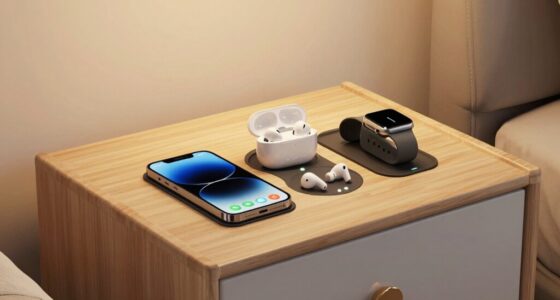
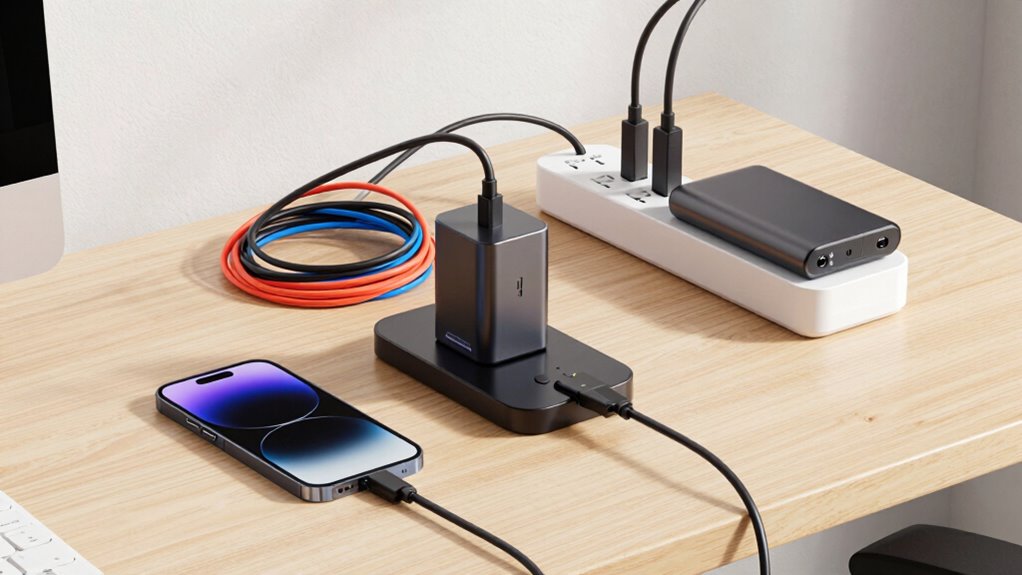

A charger is a device that converts AC power into the specific DC output your device needs, while a charging setup includes everything involved in delivering power—such as cables, adapters, power banks, and outlets. The setup determines your charging speed, safety, and efficiency, as proper management prevents issues like overheating. Knowing the difference helps you optimize your device’s performance. Keep going to discover how choosing the right components can make a big difference for your gadgets.
Key Takeaways
- A charger is a single device that converts AC to DC power, while a charging setup includes all components like cables and power sources.
- The charger provides the necessary power, but the setup determines overall charging speed, safety, and efficiency.
- Proper setup involves compatible cables, adapters, and power sources to optimize performance and prevent issues.
- The charger’s specifications must match the device’s battery capacity, but the setup ensures safe and rapid charging.
- The entire charging ecosystem impacts safety, speed, and device longevity beyond just the charger itself.
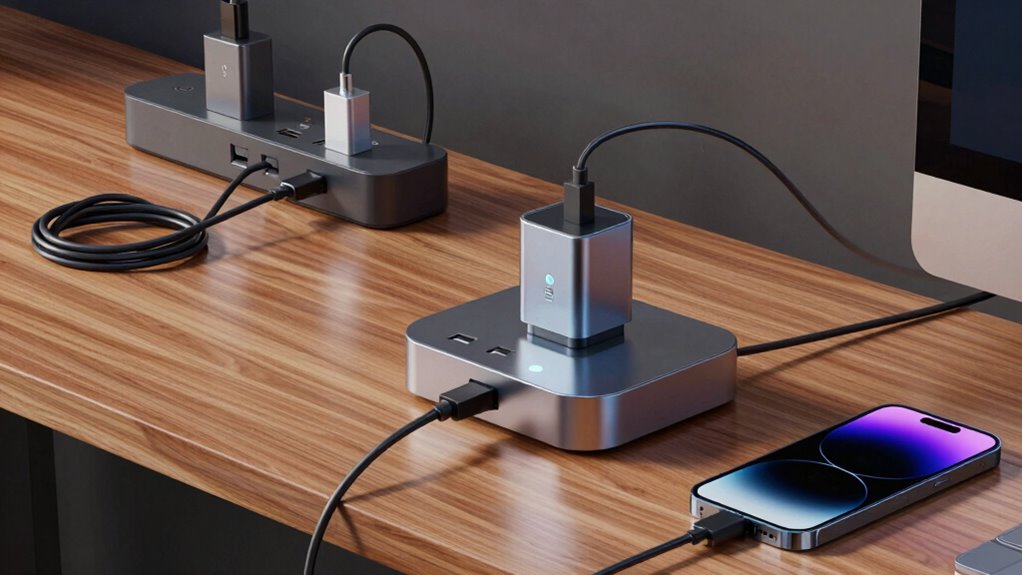
When it comes to powering your devices, understanding the difference between a charger and a charging setup is essential. A charger is a single component, usually a compact device that converts AC power from an outlet into the DC power your device needs. It’s designed to deliver a specific voltage and current, which influences the charging speed. The charger’s battery capacity compatibility is also crucial, ensuring it can safely handle the battery size of your device without risking damage or reduced lifespan.
However, a charging setup encompasses more than just the charger itself. It includes all the elements involved in charging your device—cables, adapters, power banks, wall outlets, and sometimes even wireless charging pads. Think of it as the entire system that delivers power from the source to your device. This setup determines how efficiently and quickly your device charges, especially when multiple components work together. For example, a high-quality charging cable can maintain optimal charging speed by minimizing resistance, which is vital for larger batteries or devices with fast-charging capabilities. Additionally, the quality of the power source can significantly impact the overall charging efficiency and safety. Properly managing the entire charging ecosystem can help prevent issues like overheating or inconsistent charging performance.
Charging speed is a key factor when choosing both chargers and setups. A charger with a higher current output can significantly reduce your charging time, especially for devices with large battery capacities. But it’s essential to match the charger’s output with your device’s recommended charging specifications. Using a charger with too high a current can be unsafe, while a lower current may result in slower charging. The entire setup plays a role here because factors like cable quality and power source stability influence how quickly your device reaches full charge. For instance, using a high-quality wall socket or power bank with sufficient wattage ensures the charger can operate at its maximum potential, allowing you to benefit from faster charging speeds. Moreover, understanding the power delivery standards can help you select the most compatible and efficient charging components.
In essence, understanding the difference between a charger and a charging setup helps you optimize your device’s power management. While a charger is a crucial component, the overall setup determines how effectively and safely your device charges. Paying attention to battery capacity compatibility and charging speed ensures you choose the right components—whether it’s a single charger or a comprehensive setup—that suit your device’s needs and keep your gadgets ready to go when you need them.
As an affiliate, we earn on qualifying purchases.
Frequently Asked Questions
Can I Use Any Charger With My Device?
You can’t just use any charger with your device. Wireless charging pads and power banks are designed for specific devices and charging standards. Using an incompatible charger can damage your device or result in slow charging. Always check your device’s specifications and use chargers or wireless charging pads recommended by the manufacturer. This guarantees safe, efficient charging, whether you’re using wireless charging or power banks.
How Long Does It Take to Fully Charge?
It can feel like an eternity, but usually, it takes about 2-3 hours to fully charge your device. Faster chargers boost charging efficiency, saving you precious time, while slower chargers may stretch to 4-5 hours. To protect your Battery lifespan, avoid constant fast charging. Using the right charger and setup guarantees your device charges efficiently, keeping your battery healthy for the long haul.
Are Faster Chargers Better for My Battery?
Faster chargers can boost charging efficiency, but they might affect your battery longevity over time. While they fill your battery quickly, high-speed charging generates more heat, which can accelerate battery wear. If preserving your battery’s health is important, using slower chargers may be better. Balance your needs by choosing chargers that optimize charging speed without compromising long-term battery performance.
What Safety Features Should I Look For?
Think of your charging setup as a vigilant guardian, keeping your battery’s health safe. Look for safety features like overcurrent protection, temperature sensors, and automatic shutoff, which act as shields against potential harm. These safety protocols help extend your battery’s longevity by preventing overheating and overcharging. Prioritizing these features guarantees your device stays protected, letting you charge worry-free and enjoy the long life of your battery.
Do Charging Setups Vary for Different Devices?
Yes, charging setups vary for different devices. For example, wireless charging pads work well with compatible smartphones but aren’t suitable for all devices. Power banks come in different capacities and connectors, tailored for smartphones, tablets, or laptops. You should choose a setup based on your device’s compatibility and power needs. Always check if your device supports wireless charging or requires specific cables and wattages for ideal charging.
As an affiliate, we earn on qualifying purchases.
Conclusion
So, now that you know the key differences, the question is—are you ready to upgrade your charging game? A simple charger might do the job, but a full setup could release faster, safer, more efficient power. The choice is yours, but don’t wait too long—what could you be missing out on? The future of charging is waiting just around the corner. Are you prepared to take that next step?
As an affiliate, we earn on qualifying purchases.
safe charging adapter for smartphones
As an affiliate, we earn on qualifying purchases.
As an affiliate, we earn on qualifying purchases.
Halloween Picks
halloween
As an affiliate, we earn on qualifying purchases.